A drain that blocks repeatedly despite being cleared on multiple occasions may have an underlying structural problem such as a collapsed section, displaced joint, or root intrusion that continues to cause the issue.
Persistent slow drainage that does not improve after standard clearing may indicate a restriction inside the pipe caused by significant deposit build-up, pipe deformation, or a partially collapsed section narrowing the flow.
Persistent drain odours particularly from an outside drain or a specific area of a property can sometimes indicate a leaking or cracked pipe where waste is escaping into the surrounding ground.
If water backs up in a drain, toilet, or another fitting when water is used elsewhere in the property, it can suggest a significant blockage or structural obstruction further down the drainage system.
Visible damage to an accessible pipe section, or damage identified during a CCTV inspection, indicates a section of drainage that may need repair or relining to prevent the problem from worsening.
Trees and shrubs close to drain runs can cause root intrusion through weakened joints or cracks over time. Once roots have entered a pipe, clearing them alone may not resolve the problem if the entry point is not also addressed.
An outside drain that overflows during periods of normal use rather than only during heavy rainfall can indicate a blockage or structural restriction that is preventing normal flow through the drainage system.
An area of ground that remains persistently wet or has subsided near a drain run can sometimes indicate a leaking or collapsed section of drainage pipe beneath the surface.
Older clay or concrete drain systems in Hampshire properties are more susceptible to joint movement, cracking, and structural degradation over time. Recurring problems in a property with older drainage are worth investigating properly.
Where a section of pipe has sustained visible damage, we can discuss suitable repair options based on the location, nature, and extent of the problem identified during inspection.
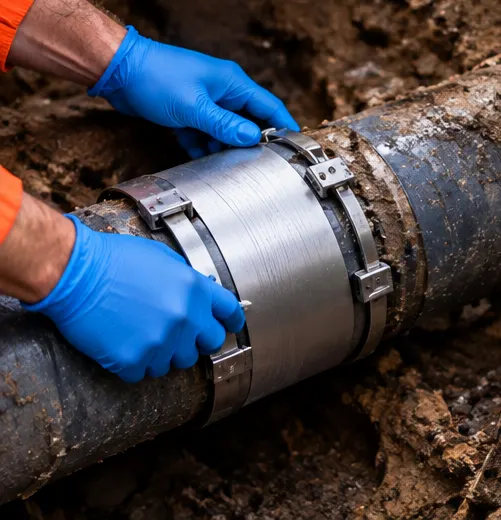
For localised damage to a specific section of pipe, a targeted patch repair may be appropriate. This involves addressing the damaged section directly rather than relining the full pipe run.
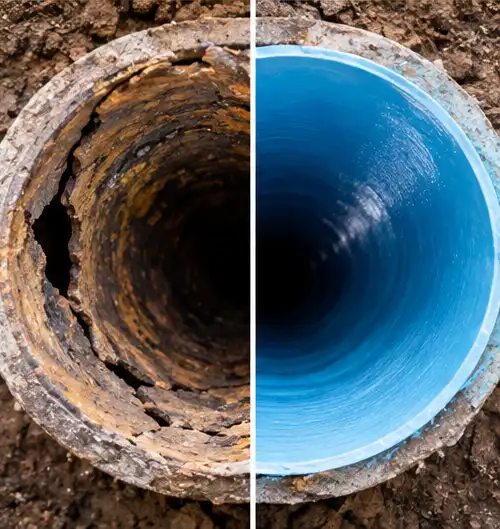
Where full pipe relining is appropriate for the condition of the drainage system, a structural lining can be installed inside the existing pipe to restore its internal integrity, without requiring excavation of the pipe itself where the system is suitable.
In many cases, we will recommend a CCTV drain survey before any repair work is carried out. This allows the nature and position of the problem to be confirmed visually before the most appropriate repair method is selected.
These two approaches serve different purposes. Understanding the difference helps in choosing the most appropriate solution for a specific drainage problem.
Targeted structural correction
Drain repair refers to addressing a specific section of damaged pipe. This may involve a targeted patch repair to a cracked or fractured area, replacing a damaged section of pipe, or correcting a displaced joint that is causing a problem.
A localised repair approach may be considered where the damage is isolated to a specific, identifiable section and the rest of the drainage system is in reasonable condition. The appropriate method depends on the location, extent, and type of damage found.
Internal pipe restoration
Drain relining involves the installation of a structural lining inside an existing pipe, restoring its internal integrity. A flexible liner is inserted into the pipe and positioned at the section requiring treatment, where it is then set in place to create a restored pipe bore.
Pipe relining may be considered where a section of drainage requires structural restoration and the pipe configuration is suitable for the relining process. It can reduce the need for excavation in cases where the pipe itself does not require physical replacement but it is not suitable for every drainage situation.
A recurring drainage problem often has an underlying cause that clearing the drain alone will not resolve. Professional inspection including CCTV camera survey where appropriate helps to identify whether a structural issue is present before any repair work begins.
Understanding the extent and nature of any damage is important before choosing a repair method. An accurate assessment of the pipe's condition allows the most appropriate approach to be selected for that specific situation.
Knowing exactly what the problem is before any repair work starts can help avoid carrying out work that is not needed or that will not resolve the actual issue causing the drainage problem.