
Buying a house involves checking much more than the condition of its roof, walls and electrical systems. The drainage network beneath a property can contain hidden defects that are difficult to identify during an ordinary viewing or general property inspection. A homebuyer drain survey Hampshire is particularly useful when purchasing an older house, investigating signs of drainage trouble, planning renovations or seeking reassurance about underground pipework before committing to a purchase. A specialist CCTV inspection can reveal cracked pipes, root intrusion, displaced joints, obstructions and other defects that may otherwise remain unnoticed.
Unlike a standard homebuyer survey, which generally focuses on accessible parts of the property, a dedicated drain inspection examines the internal condition of accessible underground drainage pipes using specialist camera equipment. For buyers considering properties in Southampton, Portsmouth, Winchester, Basingstoke and surrounding Hampshire areas, understanding the drainage system before exchange of contracts can support better purchasing decisions. Hampshire Drain Expert provides CCTV drain surveys as part of its drainage services. Arranging a suitable inspection can help buyers understand potential drainage issues, consider repair requirements and make more informed decisions about their prospective home.
Why Should Homebuyers Consider a Drain Survey in Hampshire?
A property may look well maintained above ground while its underground drainage system has developed problems over many years.
Wastewater pipes carry water from toilets, sinks, baths, showers and household appliances towards the public sewer or another approved drainage system. When these pipes become damaged, blocked or poorly aligned, the resulting problems can affect everyday use of the property.
A pre-purchase drain survey in Hampshire offers an opportunity to investigate the condition of accessible drainage pipework before taking ownership.
The purpose is not to suggest that every property has hidden drainage defects. Instead, it provides additional information where the age, condition or history of the property makes an inspection worthwhile.
What Can a CCTV Drain Survey Reveal?
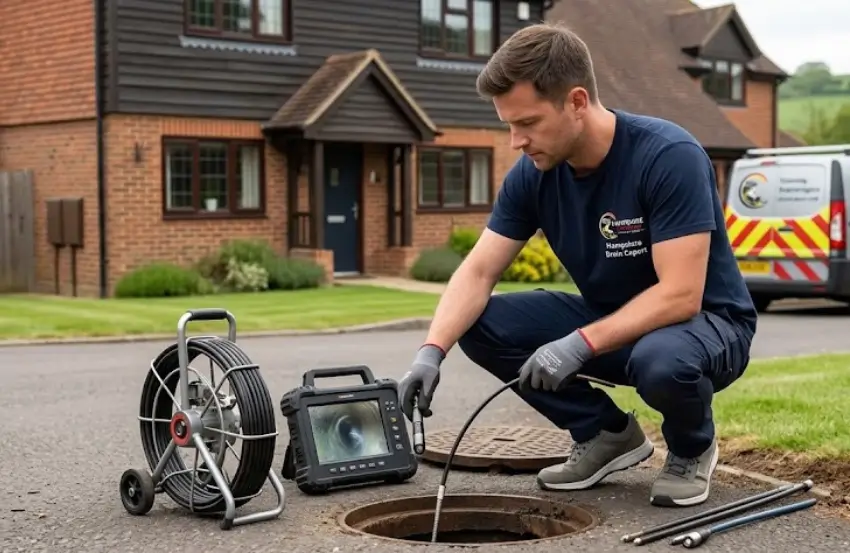
A drainage camera inspection can identify several types of defects, depending on pipe access, visibility and the condition of the system.
Common findings include:
- Cracked, fractured or broken drainage pipes.
- Tree roots entering through joints or damaged sections.
- Displaced or poorly aligned pipe connections.
- Fat, grease, scale or debris restricting water flow.
- Pipe deformation or partial collapse.
- Standing water that may indicate a gradient or obstruction issue.
- Evidence of previous repairs or changes to pipework.
The survey may also help establish the approximate route and configuration of accessible drains, although full drainage mapping or locating services may require additional work.
Not every defect requires immediate replacement. The appropriate response depends on its severity, location, likely progression and effect on drainage performance.
When Is a Homebuyer Drain Survey Most Useful?
Not every house purchase requires a specialist drainage inspection. However, certain property characteristics and warning signs make one particularly valuable.
1. Buying an Older House
Older properties may contain drainage systems installed using materials or construction methods that differ from those commonly used today.
Clay pipes, for example, can remain functional for many decades but may develop problems at joints or become vulnerable to movement and root intrusion.
Some properties have also undergone alterations that changed the original drainage layout.
A CCTV drain survey for home buyers can help assess the current condition of accessible pipework rather than relying on its age alone.
2. Purchasing a Property With Large Trees Nearby
Tree roots naturally grow towards sources of moisture and may enter drainage pipes through existing cracks or defective joints.
Once inside, roots can trap waste and contribute to recurring blockages.
Large trees do not automatically mean that underground drains are damaged. However, where mature trees are close to drainage routes, an inspection may be sensible.
A camera survey can help distinguish suspected root intrusion from other causes of restricted flow.
3. Noticing Slow Drains or Unpleasant Smells
Slow-draining sinks, gurgling toilets and unpleasant smells can indicate drainage problems.
Some symptoms result from relatively simple local blockages. Others may suggest issues further along the drainage system.
During a property viewing, pay attention to persistent smells around inspection chambers, external drains and bathrooms.
These signs do not prove that underground pipes are defective, but they provide a reasonable basis for requesting further investigation.
4. Buying a House With Previous Extensions
Extensions, conversions and major renovations can involve alterations to underground drainage.
New pipe connections, changes in pipe routes and building work near existing drains may affect access or performance.
For a property with significant alterations, a drain inspection before buying a house may help identify visible drainage defects or unusual connections.
Where construction has taken place over or near a public sewer, the buyer’s solicitor may also need to investigate relevant approvals or agreements.
5. Purchasing a Property With a History of Blockages
Repeated drainage problems deserve closer attention than an isolated blockage.
A previous owner may have arranged several drain clearances without investigating why the problem kept returning.
Possible underlying causes include root intrusion, damaged joints, pipe displacement or persistent obstructions.
A CCTV survey can help identify whether a structural defect is contributing to recurring problems.
6. Planning Major Renovations After Purchase
Buyers planning kitchen extensions, bathroom relocations or substantial refurbishment may benefit from understanding the existing drainage layout.
Knowing the condition and approximate route of accessible drains can help inform early project planning.
For drainage requirements relevant to proposed building work in England, refer to GOV.UK’s Approved Document H: drainage and waste disposal.
Homebuyer Survey vs CCTV Drain Survey: What Is the Difference?
A standard property survey and a dedicated drainage inspection serve different purposes. A residential surveyor may observe drainage-related warning signs or inspect accessible features within the agreed survey scope. However, routine property surveys do not usually involve sending cameras through underground pipes.
For an overview of the different property survey levels and what they cover, see the RICS guide to home survey types and benefits.
| Inspection feature | Homebuyer property survey | CCTV drain survey |
|---|---|---|
| Main purpose | Assess the property’s overall condition | Examine accessible drainage pipework |
| Underground camera inspection | Not normally included | Yes |
| Detect internal pipe cracks | Usually limited | Often possible |
| Identify root intrusion | May note visible clues | Can identify visible roots inside pipes |
| Assess general building condition | Yes, within survey scope | No |
| Investigate recurring drain blockages | Limited | More detailed |
| Support drainage repair planning | May recommend further checks | Can provide defect information |
A CCTV inspection complements a building survey rather than replacing it. A property surveyor may recommend specialist drainage investigation after identifying concerns. Buyers can also commission a survey independently where the property’s history or condition justifies one.
How Does a Pre-Purchase CCTV Drain Survey Work?
Understanding the inspection process helps buyers know what to expect before arranging a drainage assessment.
Step 1: Reviewing the Property and Drainage Concerns
The inspection begins by establishing the property details, known drainage problems and the purpose of the survey. Buyers may provide information from a property survey, seller disclosures or previous drainage records. This background helps identify areas that may require closer attention.
Step 2: Accessing the Drainage System
A drainage specialist identifies suitable access points, which may include inspection chambers or other accessible drainage openings. The available access depends on the property’s layout and drainage configuration. Not all sections of a drainage network can necessarily be inspected during a single visit.
Step 3: Inspecting the Pipework With a Camera
A specialist camera is passed through accessible pipes to examine their internal condition. The inspection can reveal visible damage, obstructions, root intrusion and other abnormalities. Water levels, accumulated debris or restricted access may prevent a complete inspection of certain sections.
Step 4: Assessing the Findings
The recorded observations are considered in relation to the drainage system’s condition. A small joint defect may require a different response from a severely displaced or collapsed section. Where the cause or extent of a problem remains uncertain, further investigation may be recommended.
Step 5: Considering Repairs or Further Action
Where defects are identified, the buyer can seek advice on suitable remedial options. Depending on the circumstances, solutions may include drain clearance, targeted repair, pipe relining or replacement.
The findings can also help buyers discuss potential work with their surveyor, solicitor or seller. Buyers should confirm the scope of the inspection and any written reporting requirements before booking.
What Drainage Problems Can Affect a House Purchase?
The significance of a drainage defect depends on whether it affects the property’s current performance, future maintenance requirements or planned building work.
Cracked and Fractured Drain Pipes
Cracks may develop through ground movement, deterioration, external pressure or other causes. Some defects remain relatively stable, while others can allow soil or roots to enter. The location and severity of the damage determine whether monitoring or repair is appropriate.
Root Intrusion
Roots entering drainage pipes can restrict flow and increase the likelihood of repeated blockages. Removing roots may restore flow temporarily, but an underlying defective joint or crack may still need attention.
Displaced Drainage Joints
Pipe sections can become misaligned through ground movement or changes in surrounding soil conditions. A displaced joint may create an obstruction point or interfere with normal wastewater flow.
Collapsed Drain Sections
A collapsed section can significantly restrict or prevent drainage. These defects may require more extensive repair work, depending on the pipe location and accessibility.
Incorrect or Unusual Drainage Connections
Previous building alterations may have changed how wastewater and surface water are discharged.
A camera inspection may reveal certain connection arrangements, but it cannot always establish whether they comply with regulations.
Further investigation may be required where drainage connections appear unusual or undocumented.
How Much Does a Homebuyer Drain Survey Cost in Hampshire?
The cost of a pre-purchase drainage inspection varies according to the property’s characteristics and the scope of work required.
Factors that can influence the quotation include the number of drainage runs, access arrangements, system complexity, inspection length and reporting requirements.
A larger property with multiple inspection chambers may require a different inspection scope from a small terraced house with straightforward drainage access.
Additional services, such as locating underground pipes or undertaking further investigations, may also affect the total cost.
Buyers should request a clear quotation explaining what is included, whether a written report is provided and how inaccessible sections will be handled.
Hampshire Drain Expert can be contacted to discuss the property and request information about a suitable CCTV drainage inspection.
Who Is Responsible for Drainage Problems Found Before Purchase?
Drainage responsibility is an important consideration when evaluating survey findings.
In England, a homeowner is generally responsible for private drains serving their property within the relevant ownership boundary, while sewerage companies are generally responsible for public sewers and many shared drainage pipes.
However, the exact position depends on the drainage layout, legal status of the pipe and relevant ownership arrangements.
A shared pipe should not automatically be treated as the buyer’s sole responsibility.
During conveyancing, buyers can ask their solicitor to investigate drainage and water search information, relevant property documentation and any identified concerns. For guidance on building over or near a public sewer in Southern Water’s wastewater service area, see Southern Water’s building-over-a-sewer guidance.
Should You Arrange a Drain Survey Before Exchanging Contracts?
In most circumstances, arranging a drainage inspection before exchanging contracts is preferable.
Before exchange, buyers generally have greater flexibility to investigate concerns, request further information and consider the implications of any defects.
After exchange, contractual obligations usually become binding, making unexpected findings more difficult to address.
A sensible process is to review the main property survey, consider any drainage warning signs, commission a specialist inspection where appropriate and discuss material findings with the relevant professionals before exchange.
Pre-purchase drainage checklist
Is a Drain Survey Worthwhile for Hampshire Properties?
Hampshire contains a wide range of residential property types, from historic homes to modern developments.
The age and construction of a property can influence the kinds of drainage concerns worth investigating, although location alone does not establish whether a drainage system is defective.
For example, a buyer considering an older house in Winchester may want to investigate the condition of existing pipe joints. A property with previous extensions in Southampton or Eastleigh may raise questions about altered drainage routes.
Similarly, buyers in Portsmouth, Basingstoke, Andover, Farnborough and Gosport may encounter properties with different drainage arrangements, construction histories and maintenance needs.
The most useful approach is to assess the individual property rather than assume that particular Hampshire towns have the same underground drainage problems.
A homebuyer drainage survey is especially worthwhile when it addresses a specific uncertainty that could influence the purchase.
What Should You Do When a Drain Survey Finds a Problem?
Finding a drainage defect does not automatically mean that a property purchase should be abandoned.
The next step is to understand the issue, its severity and the available solutions.
For example, a removable obstruction may be straightforward to address, while a damaged pipe beneath a building may require more detailed assessment.
Buyers should seek clarification about the affected section, whether drainage is currently functioning, the likely consequences of leaving the defect untreated and the appropriate repair options.
A repair quotation can provide useful information when discussing the purchase with the seller. However, the outcome of any negotiation depends on the circumstances and agreement between the parties.
Where a defect involves a public sewer or shared drainage system, the relevant sewerage company may need to be consulted before work is planned.
Hampshire Drain Expert offers drainage services including CCTV surveys, drain repairs and relining, and blocked drain clearance. The appropriate service depends on the inspection findings and site conditions.
How Can Homeowners Reduce Drainage Problems After Moving In?
Once a property purchase is complete, sensible drainage habits can help reduce preventable blockages.
Avoid disposing of cooking fats and oils through kitchen sinks. As these substances cool, they can accumulate inside pipework and restrict water flow.
Only flush toilet paper and human waste. Wet wipes, sanitary products and other unsuitable materials can contribute to obstructions even when labelled as flushable.
Keep accessible external drainage openings free from leaves and surface debris without opening chambers or attempting hazardous work.
Pay attention to repeated gurgling, persistent odours, slow drainage and wastewater backing up.
These symptoms may justify a professional assessment, particularly when they affect multiple fixtures or recur after clearance.
Routine care cannot prevent every structural defect, but it can help reduce avoidable drainage problems and encourage earlier investigation when warning signs appear.
Frequently Asked Questions
1. Do I need a drain survey before buying a house in Hampshire?
A drain survey is not normally a legal requirement for buying a house in Hampshire. However, it can be worthwhile for older properties, homes with previous drainage problems, properties near mature trees or houses with significant extensions. A CCTV inspection can help identify hidden defects before exchange of contracts.
2. Is a CCTV drain survey included in a standard homebuyer survey?
Usually not. Standard residential property surveys may identify visible drainage concerns, but they generally do not include a detailed CCTV inspection of underground pipes. A specialist drainage survey is normally arranged separately.
3. Can a pre-purchase drain survey detect damaged underground pipes?
Yes. A CCTV drain survey can reveal visible cracks, displaced joints, root intrusion, obstructions and certain other pipe defects. However, inspection accuracy depends on access, camera visibility and the condition of the drainage system.
4. Who should pay for a drain survey when buying a house?
The buyer commonly pays for a specialist drain survey they commission, although the buyer and seller may agree on another arrangement. Buyers should establish the inspection cost and scope before booking.
5. When is the best time to arrange a homebuyer drain survey?
The best time is generally after the purchase offer has been accepted but before exchange of contracts. This allows the buyer to review any drainage findings, obtain further advice and consider repair implications before becoming contractually committed.
Conclusion: Make an Informed Decision Before Buying Your Hampshire Home
A house purchase is a significant commitment, and the condition of its underground drainage system deserves attention where there are signs of trouble or unanswered questions.
A homebuyer drain survey Hampshire can help identify hidden defects, clarify potential maintenance requirements and provide useful information before exchange of contracts.
Whether the property is an older home, has undergone major alterations or has a history of recurring blockages, a targeted CCTV inspection can help reduce uncertainty.