
A bathroom can develop an unpleasant sewage smell even when the sink, shower and toilet appear to drain normally. This often happens because drainage gases are escaping through a faulty water seal, a dry trap, a poorly sealed waste connection or a ventilation problem. The smell may become more noticeable when water flows through the system because changes in air pressure can disturb the protective water seals inside connected pipes. A bathroom sewage smell without blockage does not necessarily mean the underground drain is obstructed. In many cases, the problem involves how wastewater pipes, traps and ventilation components work together. A damaged seal, poorly fitted connection or partially restricted vent can allow unpleasant odours to enter the room without causing an obvious drainage slowdown.
Hampshire Drain Expert helps property owners investigate drainage problems across Hampshire, including Southampton, Portsmouth, Winchester and Basingstoke. Understanding where the smell originates is the first step towards identifying the appropriate solution. A persistent sewage odour should not simply be covered with air freshener. Checking accessible drain traps, observing when the smell appears and arranging a professional assessment when necessary can help identify the underlying problem.
What Causes a Sewage Smell in a Bathroom Without a Blockage?
A drainage system is designed to carry wastewater away from a property while preventing foul gases from entering occupied rooms. Water-filled traps beneath sinks, showers and other fixtures form an important barrier between the bathroom and the drainage network.
However, several conditions can interfere with this protection.
1. Dry or Partially Empty Drain Traps
One of the most common explanations for a bathroom sewage smell is a missing or weakened water seal inside a trap.
Most bathroom sinks, showers and baths have a trap designed to retain a small amount of water after the fixture has been used. This water acts as a barrier against gases travelling back through the pipework.
When a bathroom fixture remains unused for an extended period, the water inside its trap may gradually evaporate. This can happen in guest bathrooms, spare bedrooms with en-suite facilities and properties left unoccupied during holidays.
Once the water seal disappears, unpleasant smells may pass through the waste outlet.
Running water through an unused sink or shower can sometimes restore the seal and eliminate the odour. However, a smell that returns repeatedly may indicate another drainage or ventilation problem.
2. Drainage Ventilation Problems
Wastewater flowing through drainage pipes changes the air pressure inside the system. Proper ventilation helps maintain stable pressure and protects the water seals inside connected traps.
A restricted soil vent pipe, faulty air admittance valve or unsuitable pipe arrangement can interfere with this process.
When water flows from a bath, shower or toilet, negative pressure may draw water out of another fixture’s trap. This process is known as siphonage.
Once the trap loses enough water, drainage gases can escape into the bathroom.
Common signs of ventilation-related problems include:
-
Gurgling noises from a sink or shower when another fixture drains.
-
Sewage smells appearing immediately after flushing the toilet.
-
Water levels changing unexpectedly inside a waste trap.
-
Odours that disappear temporarily and return during heavy water use.
-
Several bathroom fixtures showing similar symptoms.
These signs do not confirm a ventilation fault on their own, but they provide useful information for a professional investigation.
3. Loose or Damaged Waste Pipe Connections
Bathroom waste pipes contain joints, connectors and seals that must remain properly fitted to prevent leaks and odours.
Over time, connections may loosen or seals may deteriorate. Poor installation or movement around the pipework can also create small gaps.
Even when wastewater flows normally, drainage gases may escape through an imperfect connection.
Possible problem areas include the waste pipe beneath a basin, connections behind a bath panel, shower waste assemblies and accessible pipe joints.
A bathroom cabinet may develop a particularly strong smell when a waste connection beneath the sink is not properly sealed.
Visible leaks, damp surfaces or staining around pipe joints can provide additional clues.
4. Faulty Toilet Pan Seals
The toilet connects to the drainage system through a sealed outlet arrangement. A damaged, displaced or poorly fitted connector can allow unpleasant smells to escape.
This can happen even when the toilet flushes normally.
Signs that may indicate a problem include persistent odours near the base or rear of the toilet, visible moisture around the connection or movement in the toilet pan.
A toilet that rocks or shifts should be assessed because movement may affect its connections.
Avoid attempting to remove or reseat a toilet without suitable plumbing experience. Incorrect handling can damage fittings and create wastewater leaks.
5. Hidden Drainage Defects
A bathroom may smell of sewage despite apparently clear drains because the problem is located deeper within the drainage network.
Cracked pipework, displaced joints, damaged connections or accumulated deposits can contribute to persistent odours.
Not every underground drainage defect causes an immediate blockage. Some problems initially present as intermittent smells, damp patches or recurring minor drainage issues.
Where the symptoms suggest a problem within accessible inspection routes, a professional CCTV drain survey may help identify defects in the underground drainage system.
However, CCTV inspection is not always the first or most suitable investigation. Faults within internal traps, toilet connectors or ventilation components may require a different inspection approach.
6. Organic Deposits Inside Bathroom Waste Pipes
Hair, soap residue, body oils and other organic material can collect inside bathroom waste outlets and pipework.
As these deposits break down, they may produce unpleasant smells, particularly when warm water flows through the drain.
Unlike a completely blocked pipe, a waste pipe containing residue may continue draining at a normal speed.
A bathroom sink or shower can therefore smell unpleasant without showing obvious signs of obstruction.
Cleaning accessible waste components may resolve this type of odour, although persistent smells should be investigated rather than repeatedly treated with chemicals.
Why Does the Bathroom Smell Worse When Water Is Running?
The timing of a sewage smell can reveal important information about the drainage system.
Water flowing through a pipe displaces air. In a correctly designed drainage system, ventilation allows this movement without disturbing protective water seals.
However, pressure imbalances can cause water to move unexpectedly inside nearby traps. A compromised trap may then allow foul air to escape.
For example, flushing an upstairs toilet may cause a nearby shower trap to gurgle. Alternatively, emptying a full bath may trigger a smell from a basin waste.
These symptoms can indicate a ventilation or pipework arrangement problem rather than a conventional blockage.
Bathroom Sewage Smell: Symptoms and Possible Causes
| Bathroom symptom | Possible cause | Recommended action |
|---|---|---|
| Sewage smell from an unused shower | Dry drain trap | Run water to restore the seal |
| Smell after flushing the toilet | Trap siphonage or faulty toilet connector | Arrange an inspection if persistent |
| Sink smells when water runs | Organic deposits or waste pipe fault | Clean accessible waste components |
| Gurgling from multiple fixtures | Ventilation issue or partial restriction | Seek professional assessment |
| Odour around the toilet base | Damaged or displaced connector | Have the toilet connection checked |
| Persistent smell with clear drains | Hidden drainage defect or leaking joint | Investigate the drainage system |
| Smell beneath the bathroom basin | Loose waste connection | Inspect accessible joints for leaks |
These are possible explanations, not confirmed diagnoses. Several drainage faults can produce similar symptoms.
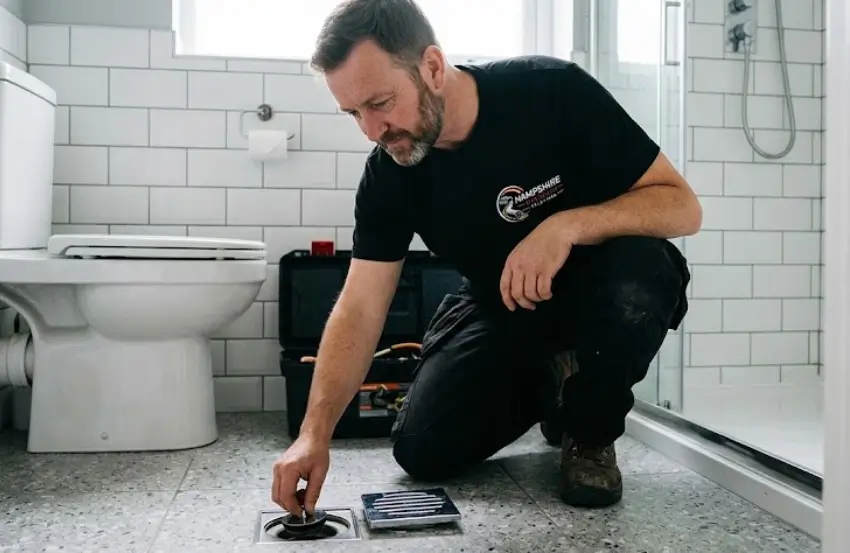
How Can You Identify Where a Bathroom Sewage Smell Is Coming From?
Finding the source of an odour is easier when you observe when and where it appears.
A simple, systematic inspection can help distinguish a localised waste outlet problem from a wider drainage issue.
Step 1: Check Which Fixture Produces the Smell
Begin by identifying whether the odour is strongest near the sink, shower, bath or toilet.
Use each fixture separately and observe whether the smell becomes stronger during or shortly after water flows.
Avoid running several fixtures simultaneously during the initial check because this makes it harder to identify which outlet is associated with the problem.
Step 2: Check Unused Drain Outlets
An infrequently used shower or basin may have lost its protective water seal through evaporation.
Run a modest amount of clean water into the outlet and observe whether the smell improves.
A temporary improvement followed by a recurring smell may suggest that the water seal is being lost again.
Step 3: Listen for Unusual Drainage Sounds
Gurgling, bubbling or sucking noises can indicate air movement through water-filled traps.
These sounds may occur when another fixture discharges wastewater into the same drainage system.
Record which fixture is being used when the sound occurs. This information can help a drainage specialist narrow down possible causes.
Step 4: Inspect Accessible Connections
Look beneath bathroom sinks and around visible waste pipe connections for moisture, staining or loose fittings.
Do not dismantle concealed plumbing or remove fixed bathroom fittings without appropriate experience.
Where visible damage or leaks are present, stop using the affected fixture until the problem has been assessed.
Step 5: Monitor Whether the Smell Returns
A sewage smell that disappears after cleaning or restoring a dry trap may have a straightforward explanation.
However, recurring odours, multiple affected fixtures or worsening drainage symptoms suggest that further investigation is appropriate.
Keep a brief record of when the smell occurs, how long it lasts and which fixtures were being used.
Can You Safely Remove a Sewage Smell Without Professional Drain Cleaning?
Some bathroom odour problems can be addressed through straightforward household maintenance.
The correct approach depends on whether the source is accessible and whether the drainage system is functioning normally.
Safe Checks and Maintenance
-
Restore unused traps: Run water through sinks, showers and baths that have not been used recently.
-
Remove accessible debris: Clear visible hair and soap residue from removable strainers and waste covers.
-
Clean waste outlets: Use a suitable non-corrosive cleaning method following the fixture manufacturer’s instructions.
-
Check for leaks: Look for moisture around visible waste pipe joints and fittings.
-
Improve ventilation: Open a window or use the bathroom extractor fan where appropriate.
-
Monitor the results: Check whether the odour disappears permanently or returns during water use.
Avoid mixing bleach, drain cleaners, acids or other household chemicals. Chemical reactions can produce dangerous fumes.
Strong chemical drain cleaners are not an appropriate substitute for diagnosing a faulty water seal, ventilation problem or damaged pipe connection.
Never enter a drain, manhole or confined drainage space to investigate a smell. Such environments can contain hazardous gases and present serious safety risks.
Where a strong unexplained odour causes dizziness, nausea or breathing difficulty, leave the affected area and seek appropriate emergency assistance. Do not assume the smell is harmless simply because water still drains normally.
When Should You Contact a Professional Drainage Specialist?
An occasional smell from a rarely used drain may disappear once its water seal is restored. Persistent or recurring sewage odours deserve closer attention.
Professional drainage assistance is particularly appropriate when several fixtures are affected, the smell returns after basic cleaning or wastewater begins draining abnormally.
Other warning signs include recurring gurgling, damp patches around concealed drainage routes, wastewater backing up and visible leaks near drainage connections.
A specialist assessment helps determine whether the problem is associated with internal plumbing, underground drainage or another part of the wastewater system.
How Professional Drainage Investigations Work
An appropriate investigation generally begins with a discussion of the symptoms and an inspection of the relevant drainage components.
The inspection may include checking accessible drainage connections, identifying possible restrictions and considering whether a ventilation problem could explain the symptoms.
Where underground pipe defects are suspected, a CCTV drain survey can provide useful visual evidence.
A camera inspection may identify:
-
Cracked or damaged drain pipes.
-
Displaced or defective pipe joints.
-
Deposits restricting wastewater movement.
-
Root intrusion into underground drains.
-
Structural problems affecting pipe condition.
CCTV surveys have limitations. They cannot directly confirm every fault in internal plumbing, trap seals or ventilation systems.
Once the cause is established, suitable solutions may include drain cleaning, clearance, pipe repairs, relining or work by a qualified plumbing professional.
The most appropriate repair depends on the location and nature of the defect.
How Can Hampshire Property Owners Prevent Recurring Bathroom Drain Odours?
Preventing unpleasant bathroom smells involves maintaining both the waste outlets and the wider drainage system.
Properties in Southampton, Portsmouth, Winchester, Basingstoke and other parts of Hampshire may have different plumbing layouts, drainage ages and maintenance requirements.
An older property might have undergone several bathroom alterations, while a newer property may contain more complex arrangements serving multiple bathrooms.
However, property age or location alone does not establish the cause of an odour.
Keep Bathroom Waste Outlets Clean
Hair, soap residue and other debris should be removed from accessible shower and basin waste components regularly.
Using a removable hair catcher can help reduce material entering the drainage system.
Cleaning should follow the fixture manufacturer’s recommendations, particularly where delicate finishes or specialist waste assemblies are installed.
Maintain Water Seals in Unused Bathrooms
Guest bathrooms and infrequently used shower rooms benefit from periodic water flow through their waste outlets.
This helps replenish the water retained in traps and maintain the barrier against drainage gases.
Address Gurgling and Recurring Smells Early
A sewage smell that repeatedly returns after running water should not be dismissed as a normal bathroom condition.
Recurring symptoms may indicate pressure changes, water seal loss or another defect requiring investigation.
Arrange Drainage Maintenance Where Appropriate
Commercial premises, rental properties and buildings with multiple bathrooms may benefit from planned drainage checks based on their condition and usage.
Maintenance requirements should reflect the property’s actual drainage risks rather than an arbitrary cleaning schedule.
Hampshire Drain Expert provides drainage services for residential and commercial customers, including drain cleaning, inspections and repairs.
Who Is Responsible for Fixing Bathroom Drainage Problems in Hampshire?
Responsibility depends on where the defect is located and whether the affected pipe is part of a private drainage system or a public sewer.
In England, homeowners and landlords are generally responsible for private drains serving their property within its boundary. Sewerage companies are usually responsible for public sewers and most lateral drains outside property boundaries, subject to exceptions.
Ofwat provides guidance on the distinction between private drainage responsibilities and sewerage company responsibilities.
For rented accommodation, tenants should report persistent sewage smells to their landlord or managing agent so that the relevant investigation can be arranged.
Where a defect appears to involve a public sewer, the appropriate sewerage company should be contacted.
Frequently Asked Questions
1. Can a bathroom smell of sewage without a blocked drain?
Yes. A bathroom can smell of sewage even when water drains normally. Dry traps, damaged seals, ventilation faults and defective waste pipe connections can allow drainage gases to enter the room without an obvious blockage.
2. Why does my bathroom smell of sewage when the shower runs?
Running shower water can change air pressure within connected waste pipes. Where a trap seal is compromised or ventilation is inadequate, drainage gases may escape. Organic deposits within the shower waste can also produce unpleasant smells.
3. Why does my bathroom smell like sewage after flushing the toilet?
Flushing can create pressure changes within the drainage system. A damaged toilet connector, disturbed water seal or ventilation fault may allow unpleasant odours to escape. Persistent symptoms should be professionally investigated.
4. Can a CCTV drain survey find the cause of bathroom sewage smells?
A CCTV drain survey can help identify defects in accessible underground drainage pipes, including cracks, displaced joints and restrictions. However, internal trap and ventilation faults may require separate plumbing checks.
5. When should I call a drainage specialist for a bathroom sewage smell?
Arrange professional help when the smell persists, returns repeatedly, affects multiple fixtures or appears alongside gurgling, leaks or wastewater backing up. Identifying the underlying cause is more effective than repeatedly masking the odour.
Conclusion: Stop Bathroom Sewage Smells by Finding the Cause
A bathroom that smells of sewage despite clear drains may have a problem with its water seals, waste pipe connections, ventilation or underground drainage. Although cleaning accessible waste outlets and replenishing dry traps can sometimes resolve the issue, persistent smells require a more detailed assessment.
Understanding when the odour occurs and which fixtures are affected can help identify the most appropriate next step.