
Buying a house involves several checks, but the condition of the underground drainage system is easy to overlook. A property may appear well maintained above ground while hidden pipes contain cracks, blockages or other defects.
So, does a home survey check drains? A standard UK home survey may include a visual assessment of accessible drainage features, but it does not normally involve a detailed inspection of underground drainpipes. Surveyors may examine visible inspection chambers where safe and accessible, look for signs of drainage problems and recommend further investigation. However, a standard home survey does not usually include a CCTV drain inspection.
This distinction matters because underground drainage faults can remain hidden until wastewater starts backing up, unpleasant smells develop or repairs become necessary.
Hampshire Drain Expert provides CCTV drain surveys in Hampshire to help property buyers and owners understand the condition of their drainage systems. A dedicated drainage inspection can identify problems that a general property survey may not reveal.
Understanding what your survey covers, and when additional drainage checks are worthwhile, can help you make a more informed decision before purchasing a property.
What Does a Standard Home Survey Include?
A home survey provides an independent assessment of a property’s condition. Its purpose is to highlight visible defects, potential risks and areas requiring further investigation.
The Royal Institution of Chartered Surveyors (RICS) provides different levels of home survey, with the extent of inspection depending on the service selected. Buyers can compare the available survey levels using the official RICS guide to home survey types and benefits.
A surveyor generally assesses accessible parts of the property without carrying out invasive investigations or specialist testing.
Typical areas include:
-
Roof coverings, chimneys and visible roof structures.
-
Walls, ceilings, floors and accessible structural elements.
-
Windows, doors and external joinery.
-
Signs of damp, movement or deterioration.
-
Visible plumbing and drainage components.
-
External ground conditions and features that may affect the building.
The surveyor’s report should explain the limitations of the inspection and identify matters requiring specialist attention.
Do House Surveys Check Drains?
House surveys may include limited visual drainage checks, but the exact scope depends on the survey level, accessibility and agreed terms.
A surveyor might identify:
-
Damaged or displaced drain covers.
-
Wastewater overflowing from accessible chambers.
-
Unpleasant drainage odours.
-
Signs of leakage or persistent dampness.
-
Poor drainage around external surfaces.
-
Visible pipework defects.
-
Evidence of previous drainage-related repairs.
These observations can help identify possible problems. However, they cannot reliably establish the condition of underground pipes hidden beneath driveways, gardens or buildings. A drain can also function normally during a brief property inspection despite having structural defects that may cause problems later.
Are Underground Drains Checked During a RICS Home Survey?
RICS Home Survey Levels 1, 2 and 3 differ in the depth of their property assessments. None should automatically be treated as a substitute for a specialist CCTV drainage survey.
| Survey Type | Drainage Inspection | Limitation |
|---|---|---|
| Level 1 | Visual inspection only; chamber covers are not lifted | Hidden drains are not inspected |
| Level 2 | Accessible chamber covers may be lifted and chambers visually inspected where safe | No routine internal CCTV inspection |
| Level 3 | Accessible chambers inspected and normal drainage operation observed where safe | Does not replace a CCTV survey |
| CCTV Drain Survey | Camera inspection inside accessible drainage pipes | Restricted access or blockages can limit coverage |
The extent of drainage inspection depends on the RICS Home Survey level, safe access and the agreed scope of work. Level 2 and Level 3 surveys can include visual inspection of accessible drainage chambers, but they do not routinely involve CCTV examination of underground pipes. Buyers should confirm the inspection scope with their surveyor before booking.
Does a Level 2 Home Survey Include Drains?
A Level 2 Home Survey is commonly selected for conventional properties in reasonable condition.
A RICS Level 2 Home Survey includes a visual inspection of accessible drainage features. Where it is safe and practical, the surveyor will lift accessible inspection chamber covers and visually inspect the chambers. The surveyor may report signs of blockages, damage or other concerns and recommend specialist investigation. However, the survey does not normally include a CCTV examination of underground drains.
For example, a surveyor might notice wastewater standing in an accessible inspection chamber or evidence of drainage-related dampness. The report may recommend investigation by a drainage specialist. A camera survey can then help determine whether a blockage, pipe defect or another issue is responsible.
Does a Level 3 Building Survey Check Underground Drains?
A RICS Level 3 Home Survey provides a more detailed assessment of the property, including accessible drainage features. Where safe and practical, the surveyor will inspect accessible drainage chambers and observe how drains operate during normal household use. However, this inspection does not automatically include a CCTV survey of underground pipework. Hidden defects such as fractures, displaced joints or root intrusion may require a specialist drainage inspection.
The surveyor may discuss potential drainage risks, report visible defects and recommend specialist investigations. This is particularly relevant where a property has experienced movement, recurring dampness or previous drainage repairs. A Level 3 survey should therefore be considered a broader building assessment rather than a replacement for a dedicated underground drainage inspection.
Why Can a Standard Property Survey Miss Drainage Problems?
Underground drains are concealed, and many defects cannot be identified through visual inspection alone. Pipes may run beneath extensions, landscaped gardens, patios, driveways and neighbouring land. Some sections may be difficult to access, particularly where inspection chambers are covered or missing. Even when wastewater flows normally, deterioration may already be developing.
1. Cracked or Fractured Drainpipes
Underground pipes can develop cracks through ground movement, ageing or external loading. Small fractures may not immediately prevent wastewater from flowing. Over time, however, they can allow water to escape or surrounding material to enter the pipe. A standard property survey may not reveal these defects unless there are visible secondary signs.
2. Tree Root Intrusion
Roots can enter drainage systems through existing cracks or poorly sealed joints. Once inside, they may restrict wastewater flow and trap debris. The surrounding garden may look healthy, and the drains may continue working until the obstruction becomes more significant. A specialist camera inspection can help locate root intrusion and assess its extent.
3. Displaced Pipe Joints
Underground pipes consist of sections joined together. Ground movement or deterioration can cause joints to become misaligned. These defects may contribute to blockages, leakage or recurring drainage problems. Because the affected sections are buried, identifying their condition normally requires specialist investigation.
4. Build-Up Inside Drainpipes
Fat, grease, scale, silt and other deposits can accumulate within drainage systems. A partial restriction may cause only occasional slow drainage. During a general house survey, the system may appear to function normally because the inspection does not reproduce everyday household water usage over an extended period.
5. Previous Drainage Repairs
A property may have undergone drainage repairs before being marketed for sale. Some repairs are straightforward and effective, while others may require follow-up inspection. Where drainage alterations or repairs are disclosed, buyers can ask for supporting documents and consider whether further investigation is necessary.
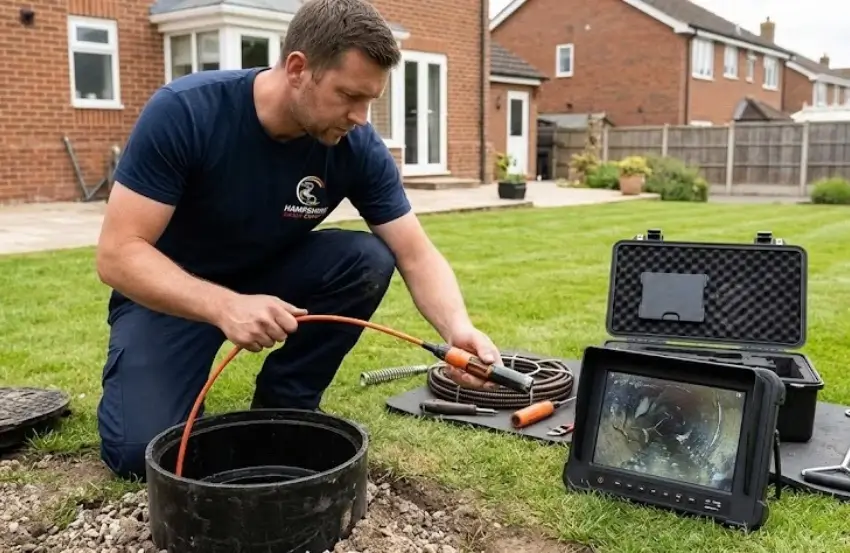
What Is a CCTV Drain Survey and How Does It Work?
A CCTV drain survey is a specialist inspection that uses a camera to examine the inside of accessible drainage pipes. Unlike a general home survey, the inspection focuses specifically on the drainage system. The camera allows the drainage specialist to observe pipe conditions and identify visible defects without routinely excavating the ground.
A typical CCTV drainage inspection involves:
-
Reviewing the concern: Establishing the property’s drainage layout where known, access arrangements and any reported problems.
-
Locating suitable access: Identifying inspection chambers or other appropriate entry points.
-
Inspecting the pipework: Passing a drainage camera through accessible sections of the system.
-
Identifying defects: Looking for cracks, displaced joints, obstructions, root intrusion or other visible problems.
-
Explaining the findings: Discussing the condition of inspected sections and whether maintenance, further investigation or repairs are appropriate.
A camera survey can provide valuable evidence, but it cannot guarantee that every section of a drainage system will be inspected. Severe blockages, collapsed pipes and restricted access may limit coverage.
What Can a CCTV Drain Survey Detect?
Depending on visibility and access, a CCTV inspection may reveal:
-
Cracked, fractured or damaged pipe sections.
-
Root intrusion and internal obstructions.
-
Displaced or poorly aligned joints.
-
Sediment, grease and debris build-up.
-
Pipe deformation or signs of collapse.
-
Evidence of water standing in the pipe.
-
Connections or alterations requiring further assessment.
A survey can also help determine whether a problem is isolated or affects multiple sections of the accessible drainage system. For further information about specialist inspections, see Hampshire Drain Expert’s CCTV drain survey services in Hampshire.
Should You Arrange a CCTV Drain Survey Before Buying a House?
A CCTV drain survey is not automatically necessary for every property purchase. However, it can be worthwhile when the property presents drainage-related risks or the general survey identifies concerns. The decision should reflect the property’s condition, history and available information.
Situations Where a Drain Survey May Be Worth Considering
Consider a specialist drainage inspection when:
-
The home survey recommends further drainage investigation.
-
There are signs of repeated drain blockages.
-
Wastewater drains slowly from multiple fixtures.
-
The property has experienced unexplained dampness or ground movement.
-
Mature trees are located near suspected drainage routes.
-
An extension has been built over or close to existing drains.
-
Previous owners report drainage repairs.
-
Inspection chambers contain standing wastewater or visible debris.
-
The property is older and the condition of its drainage system is uncertain.
These factors do not necessarily indicate serious damage. They are reasons to investigate further before making a major financial commitment.
When Should a Homebuyer Book the Inspection?
Ideally, buyers should consider any recommended specialist drainage checks before exchanging contracts. For further guidance, read our article on when a drain survey is useful when buying a house in Hampshire.
This provides an opportunity to review the findings, obtain professional advice and understand whether remedial work may be necessary. The timing should be discussed with the conveyancer, surveyor and seller because access permission and transaction deadlines can affect arrangements.
What Happens When a Home Survey Identifies Drainage Concerns?
A drainage-related observation in a survey report does not automatically mean the property is unsuitable for purchase. The important next step is to establish what the observation means and whether further investigation is required.
A practical approach is to:
-
Read the drainage-related comments and limitations in the survey report.
-
Ask the surveyor to explain any recommended specialist investigation.
-
Request relevant maintenance or repair records from the seller.
-
Arrange permission for a drainage specialist to access the property.
-
Review the inspection findings before deciding on further action.
-
Obtain a repair assessment where a defect is confirmed.
-
Discuss significant findings with your conveyancer before exchange.
This process helps distinguish between routine maintenance issues and defects that may require more extensive work.
Can Drainage Problems Affect a Property Purchase?
Yes. Significant drainage defects can affect a buyer’s assessment of the property’s condition and potential future costs. For example, a blocked drain requiring clearance presents a different concern from a collapsed underground pipe beneath an extension.
A specialist inspection can help clarify the nature of the problem, although the full repair scope may require additional investigation. Where a defect is confirmed, buyers may wish to discuss repair arrangements or the transaction terms with their professional advisers.
Who Is Responsible for Underground Drains at a Property?
Responsibility for underground drainage depends on the type of pipe, its location and how it connects to the public sewerage network.
In England, homeowners are generally responsible for private drains serving their property within its boundary. Sewerage companies are usually responsible for public sewers and lateral drains, although exceptions can apply.
Buyers should not assume that every pipe beneath a garden or driveway is privately maintained. For further information, see Ofwat’s guidance on public and private sewer responsibilities. The relevant sewerage company and conveyancer can help clarify responsibilities for a particular property.
What About Shared Drains?
A drainage pipe may serve more than one property, especially in terraces, converted buildings and developments with communal drainage. The legal and maintenance arrangements can differ depending on the system.
Before purchasing a property with shared drainage, it is sensible to establish what is known about the pipe routes, access rights and maintenance responsibilities.
How Can Homebuyers Recognise Drainage Warning Signs?
Although a visual inspection cannot confirm underground pipe condition, buyers can remain alert to obvious drainage problems during property viewings.
Common warning signs include:
-
Water draining unusually slowly from sinks or baths.
-
Toilets that repeatedly block or flush poorly.
-
Gurgling sounds from drainage outlets.
-
Persistent foul smells near drains or inspection chambers.
-
Wastewater overflowing from an outside drain.
-
Unexplained wet patches in otherwise dry weather.
-
Repeated drainage complaints disclosed by the seller.
These symptoms can have several causes. A single slow-draining sink, for example, may involve a local trap blockage rather than a damaged underground drain. Multiple affected fixtures or recurring problems deserve closer attention.
Can You Test the Drains Yourself During a Viewing?
Basic observations can help, but they are not a reliable substitute for a professional drainage inspection. With the seller’s permission, a buyer may observe how sinks, baths and toilets drain during normal use. Avoid removing inspection chamber covers, entering confined spaces, using aggressive drain chemicals or attempting to access underground pipework.
Inspection chambers can contain hazardous gases, contaminated wastewater and other risks. Where a problem is suspected, specialist assessment is the safer option.
How Can Drainage Problems Be Prevented After Buying a Property?
Good drainage habits can reduce avoidable blockages and help homeowners identify emerging issues.
Keep Cooking Fat and Grease Out of Drains
Cooking oil, fat and grease can accumulate inside pipes as they cool. Allow these substances to cool and dispose of them appropriately rather than pouring them down the kitchen sink. Use sink strainers to catch food particles and other debris.
Avoid Flushing Unsuitable Materials
Toilets are designed to handle human waste and toilet paper. Wet wipes, sanitary products, cotton buds and other unsuitable materials can contribute to blockages, even when some products are marketed as flushable.
Respond to Recurring Drainage Symptoms
Repeated blockages, persistent smells and slow drainage should not simply be ignored. Clearing an obstruction may restore flow temporarily, but recurring problems can indicate an underlying defect. A drainage assessment can help establish whether cleaning, inspection or repair is appropriate.
Maintain Accessible Drainage Areas
Keep surface water gullies and accessible external drainage points free from leaves and loose debris where this can be done safely. Avoid lifting heavy manhole covers or working around contaminated wastewater. Professional assistance is appropriate where the problem extends into underground pipework or the source is uncertain.
What Drainage Services May Be Needed After a Home Survey?
Different findings require different solutions.
| Drainage finding | Possible next step | Relevant service |
|---|---|---|
| Suspected hidden pipe defect | Internal camera inspection | CCTV Drain Survey |
| Localised blockage | Assess and clear the obstruction | Blocked Drain Clearance |
| Repeated underground blockage | Investigate the underlying cause | CCTV Survey and Drain Clearance |
| Cracked or damaged drainpipe | Assess suitable repair options | Drain Repair or Relining |
| Significant pipe deterioration | Specialist assessment of repair requirements | Drain Repairs |
| Recurring build-up | Investigate causes and maintenance needs | Drain Cleaning and Maintenance |
The correct solution depends on the actual condition of the pipework, accessibility and the nature of the problem. Hampshire Drain Expert provides drain clearance services and drain repair and relining services alongside CCTV drainage inspections.
Why Are Drainage Checks Relevant for Hampshire Homebuyers?
Property buyers across Hampshire may encounter different building ages, drainage arrangements and property layouts. An older terraced home in Portsmouth may have different drainage access arrangements from a newer property in Basingstoke or a house with an extension in Winchester. Buyers should consider the age, layout and maintenance history of the individual property’s drainage system.
Similarly, buyers in Southampton, Eastleigh and Andover may need to consider how previous alterations, landscaping or shared drainage arrangements affect access to underground pipes. These are property-specific considerations rather than evidence that a particular town has defective drains.
The important question is whether the individual property’s drainage system has been adequately assessed. Hampshire Drain Expert supports homeowners and property buyers with drainage inspections across its Hampshire service area. For buyers concerned about underground pipe condition, a specialist CCTV inspection can complement the general property survey and provide a clearer understanding of the drainage system.
Frequently Asked Questions
1. Does a homebuyers survey include drains?
A homebuyers survey may include visual observations of accessible drainage features and warning signs. However, it does not normally include a detailed internal inspection of underground drainpipes. A specialist CCTV survey is needed for that purpose.
2. Can a standard house survey detect blocked drains?
A standard survey may identify visible symptoms such as overflowing chambers, unpleasant odours or slow drainage. It cannot reliably detect every underground blockage, particularly where the drainage system appears to function normally during the inspection.
3. Is a CCTV drain survey compulsory when buying a house?
No. A CCTV drain survey is not generally a compulsory part of buying a house in England. However, it may be advisable when the home survey raises concerns, previous drainage problems are disclosed or the condition of underground pipes is uncertain.
4. Who pays for a CCTV drain survey before buying a property?
The person arranging the inspection commonly pays for it, but buyers and sellers can agree different arrangements. The cost and responsibility should be confirmed before booking, particularly where the inspection forms part of purchase negotiations.
5. Should a CCTV drain survey be completed before exchanging contracts?
Where a drainage inspection is recommended, completing it before exchange is generally preferable. This allows the buyer to understand potential defects, seek repair advice and discuss significant findings with their conveyancer before becoming legally committed to the purchase.
Conclusion: Does a Home Survey Check Drains Thoroughly Enough?
A standard home survey can highlight visible drainage concerns, but it does not normally provide a complete assessment of underground drainpipes. Even a detailed Level 3 Home Survey has limitations when it comes to concealed drainage systems.
For buyers concerned about hidden defects, recurring blockages or previous drainage repairs, a CCTV drain survey can provide valuable additional information before a purchase is finalised.
Arrange a CCTV Drain Survey in Hampshire
Are you buying a property and concerned about hidden drainage problems? Hampshire Drain Expert provides CCTV drain surveys to help homeowners and property buyers investigate underground drainage conditions.
Speak to our team about arranging an inspection.