
An unpleasant smell coming from an outdoor drain can be confusing, particularly when wastewater continues to flow normally. A strong sewage-like odour does not always mean there is a complete blockage. Sometimes the problem involves trapped debris, a dry water seal, damaged pipework or poor drainage ventilation.
When outside drain smells persist despite normal water flow, the most common explanations include decomposing organic matter, grease deposits, a dry or faulty gully trap, partially obstructed pipework and defects that allow foul air to escape. A drain can remain functional while still developing conditions that produce unpleasant odours.
Homeowners can begin by checking for visible debris, observing how water drains and identifying whether the smell becomes stronger after rainfall or during periods of dry weather. Simple surface cleaning may help with minor deposits, but persistent sewage smells require further investigation.
Hampshire Drain Expert provides drainage services across Hampshire, including Southampton and Portsmouth. Professional drain inspections can help identify hidden drainage defects where basic checks do not reveal the source.
The most effective solution depends on the cause. Understanding why an outside drain smells, rather than repeatedly applying drain-cleaning products, helps prevent unnecessary work and recurring problems.
Why Does an Outside Drain Smell When Water Is Draining Normally?
A drain does not need to be completely blocked to produce unpleasant smells.
Outdoor drainage systems carry wastewater away from buildings, and some components are designed to prevent foul air from escaping. Problems can develop when waste accumulates, water seals disappear or drainage components deteriorate.
Water may continue flowing through a pipe even when grease, sediment or other deposits have collected along its internal surface.
These deposits can trap organic material, allowing bacteria to break it down and release unpleasant odours.
Similarly, a damaged pipe connection may allow foul air to escape without significantly affecting the movement of wastewater.
This explains why a drain can appear to work normally while still needing attention.
Can a Drain Smell Without Being Blocked?
Yes. A functioning drain can produce bad smells because of trapped waste, missing water seals, ventilation problems or damaged drainage components.
Normal drainage does not necessarily confirm that the entire underground pipe system is in good condition.
Why Might the Smell Come and Go?
Intermittent odours may relate to changes in water usage, weather conditions or air movement through the drainage system.
For example, a gully that receives little wastewater may lose its water seal during dry weather. A partial obstruction may also retain waste that produces stronger smells at certain times.
Noticing when the smell appears can help narrow down the likely cause.
What Are the Main Causes of Smelly Outside Drains?
Several drainage conditions can create unpleasant outdoor odours without stopping water flow.
The following table explains the most common possibilities.
| Possible Cause | Common Warning Signs | Appropriate Action |
|---|---|---|
| Dry gully trap | Sewage-like smell after dry weather | Check whether the gully has a water seal and replenish it where appropriate |
| Grease and food deposits | Persistent smell near kitchen wastewater outlets | Remove accessible surface debris and investigate recurring deposits |
| Partially obstructed drain | Occasional gurgling or slower drainage | Arrange an inspection where symptoms continue |
| Cracked drainage pipe | Persistent odour near a particular area | Consider a CCTV drain survey |
| Faulty pipe connection | Smell around drainage joints or chambers | Have the connection assessed |
| Ventilation problem | Intermittent foul smells or gurgling | Arrange professional drainage investigation |
| Organic debris | Musty or rotten smell near an outdoor gully | Carefully remove accessible leaves and debris |
These symptoms provide useful clues, but they do not confirm a diagnosis. Several problems can produce similar smells.
1. Dry or Faulty Gully Traps
Some outdoor gullies contain a water trap that acts as a barrier against foul air.
The water held inside the trap helps prevent gases from travelling back through the drainage opening.
When this water evaporates or the trap becomes defective, unpleasant smells may escape.
This can happen around infrequently used drainage points, particularly during prolonged dry weather.
Adding clean water to a suitable trapped gully may restore the water seal.
However, not every outdoor drain has the same design. Rainwater gullies, foul-water gullies and combined drainage systems may operate differently.
A persistent smell after replenishing the trap could indicate another issue.
2. Grease, Fat and Food Waste Accumulation
Kitchen wastewater can contain cooking oils, fats and small food particles.
As these materials cool, they may stick to the internal surfaces of drainage pipes.
Over time, deposits can trap additional waste and create conditions for unpleasant smells.
A pipe may still allow water to pass even when a significant amount of residue has accumulated.
Warning signs include:
- Unpleasant smells near an outdoor kitchen gully.
- Greasy residue around accessible drainage openings.
- Recurring odours after washing dishes.
- Gradually slower wastewater drainage.
- Occasional bubbling or gurgling sounds.
Avoid pouring cooking oil or grease into sinks. Allow fats to cool and dispose of them appropriately instead.
3. Partially Blocked Drainage Pipes
A partial blockage is different from a complete obstruction.
Water can still pass through the remaining space inside the pipe, although waste may collect around the restricted section.
Common materials contributing to partial obstructions include grease, sediment, food waste and unsuitable items flushed into the drainage system.
As trapped organic matter decomposes, it can release unpleasant smells.
A drain that appears to work normally today may develop slower flow or repeated blockages as deposits increase.
Persistent smells combined with gurgling, wastewater backing up or recurring drainage problems justify professional inspection.
4. Cracked or Damaged Underground Drainpipes
Damaged pipework can allow foul air to escape into the surrounding ground.
Cracks, displaced joints and deteriorating connections may create openings through which odours travel.
Some defects are small enough that wastewater continues to flow normally.
Possible warning signs include persistent smells concentrated around one location, unexplained damp ground or repeated drainage problems.
However, these symptoms can have several causes, and the location of a smell does not always identify the exact damaged pipe section.
A professional CCTV drain survey can help inspect accessible pipework for visible cracks, displaced joints, obstructions and other defects.
5. Drainage Ventilation Problems
Drainage systems require appropriate ventilation to help manage air pressure and allow wastewater to flow correctly.
Ventilation defects or restrictions can sometimes contribute to gurgling, trap water loss and foul odours.
Problems may involve obstructed vent pipes, defective air admittance valves where fitted, or unsuitable drainage connections.
Because ventilation components vary between properties, diagnosing the problem requires an understanding of the drainage layout.
Do not attempt to access roof-level vent pipes or dismantle unfamiliar drainage fittings.
A drainage specialist can assess the symptoms and determine whether further inspection is necessary.
6. Leaves, Mud and Organic Debris
Outdoor gullies may collect leaves, soil, moss and other organic materials.
When this material remains wet, it can decompose and create unpleasant smells.
The problem is particularly noticeable around gullies beneath trees or near landscaped areas.
Water may continue flowing through the opening even when debris has accumulated around the gully.
Removing visible, accessible material can sometimes resolve the issue without further drainage work.
However, repeated accumulation or persistent odours may indicate that deposits have travelled deeper into the system.
How Can You Stop Outside Drains Smelling?
The correct approach depends on whether the smell comes from accessible debris, a missing water seal or a problem deeper within the drainage system.
Begin with simple observations and low-risk checks.
Step 1: Identify Where the Smell Is Strongest
Walk around the accessible outdoor drainage areas and note where the odour appears most noticeable.
Check around:
- Outdoor kitchen gullies.
- Accessible drainage channels.
- Rainwater outlets.
- Drainage inspection covers.
- Areas where wastewater leaves the building.
Avoid opening heavy manhole covers or entering drainage chambers.
A smell near a drain does not necessarily prove that the drain itself is responsible. Nearby waste containers, standing water and other sources may produce similar odours.
Step 2: Check for Visible Debris
Inspect the surface of accessible gullies for leaves, food residue and other material.
Wear suitable protective gloves and remove loose debris using appropriate tools.
Place collected waste in a suitable container rather than washing it into the drainage system.
Do not reach into deep openings or attempt to remove fixed drainage components.
Step 3: Check the Water Seal
Where the outdoor gully is designed with a water trap, carefully adding clean water may help restore a dry seal.
Observe whether the smell improves afterwards.
This method is not suitable for every type of outdoor drain, and it will not repair damaged pipework or resolve a deeper obstruction.
Step 4: Observe How Wastewater Flows
Pay attention to whether wastewater drains at its usual rate.
Look for standing water, bubbling, gurgling or wastewater returning towards the opening.
These signs can indicate a restriction or another drainage defect.
Avoid deliberately flooding the drain to test it, particularly when a blockage is suspected.
Step 5: Monitor Recurring Odours
Record when the smell appears and whether it changes after rainfall, household water use or dry weather.
Useful observations include:
- The time and location of the smell.
- Whether drainage remains normal.
- Changes after heavy rainfall.
- Gurgling from nearby fixtures.
- Whether basic surface cleaning makes a difference.
These details can help a drainage specialist investigate the problem more efficiently.

What Should You Avoid When Cleaning a Smelly Outside Drain?
Some common drain-cleaning methods can create additional risks without addressing the underlying cause.
Avoid Mixing Chemical Drain Cleaners
Chemical drain unblockers can contain corrosive substances.
Mixing different products, including bleach and acidic cleaners, can release dangerous gases.
Chemical products may also remain in the drainage system, creating hazards for anyone carrying out subsequent work.
A persistent smell is not sufficient evidence that a chemical treatment is appropriate.
Avoid Pouring Boiling Water Into Unknown Pipework
Very hot water may affect some plastic drainage components or fittings, depending on their material and condition.
It is safer to avoid using boiling water as a general treatment for unfamiliar outdoor drainage systems.
Avoid Forcing Tools Into Underground Pipes
Improvised rods, metal wires and other unsuitable tools can become trapped or damage drainage components.
Drain rods also require correct handling and an understanding of the drainage layout.
Deep obstructions are better investigated using suitable professional equipment.
Avoid Entering Drainage Chambers
Underground chambers can contain hazardous gases, contaminated wastewater and other serious risks.
Never enter a manhole, inspection chamber or confined drainage space.
Professional investigation is the appropriate option when the suspected problem lies beyond safely accessible areas.
Why Does an Outside Drain Smell Worse After Rain?
Rainfall can change how water and air move through a drainage system.
In some circumstances, increased water flow may disturb accumulated deposits or change air pressure within the pipework.
This can make existing odours more noticeable.
However, the relationship between rainfall and drainage smells depends on the property’s drainage arrangement.
Rainwater and Foul-Water Drainage
Some properties have separate systems for rainwater and wastewater, while others may have combined drainage arrangements.
Rainwater entering a foul-water system through an unsuitable connection can contribute to drainage problems.
Likewise, wastewater entering a surface-water drain can cause pollution.
For further information about wastewater services and drainage responsibilities, visit Southern Water, which serves many properties across Hampshire.
Could Heavy Rain Reveal an Existing Problem?
Yes. Heavy rainfall may make existing drainage defects more noticeable, particularly where pipework has restricted flow, defective joints or inappropriate connections.
A recurring sewage smell after rain deserves attention, especially when accompanied by overflowing gullies, wastewater backing up or unusually wet ground.
Can a Cracked Drainpipe Cause Smells Without a Blockage?
Yes. Cracked pipes and defective joints can release foul air even while wastewater continues to move through the drainage system.
The severity depends on the location and condition of the defect.
Small cracks may initially produce few obvious drainage symptoms. More extensive damage can contribute to leakage, ground movement or recurring obstructions.
A CCTV inspection can help identify visible internal pipe defects, although camera visibility may be limited by standing water, deposits or the condition of the pipe.
A camera survey does not automatically establish every cause of leakage or odour. Additional testing may be appropriate where the findings remain inconclusive.
Hampshire Drain Expert offers drain repairs and relining services for drainage problems requiring professional assessment.
The appropriate repair method depends on the defect, pipe material, access and overall condition.
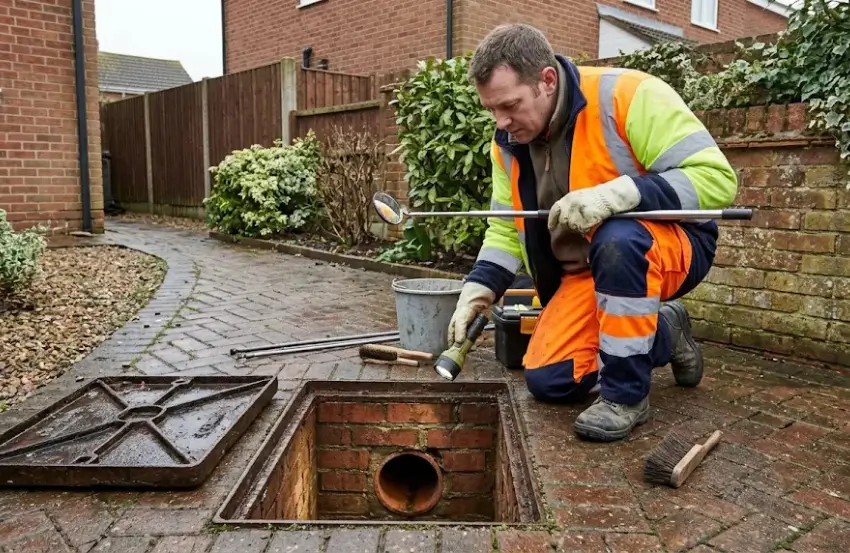
When Is a Professional Drain Inspection Necessary?
Basic surface cleaning may resolve smells caused by accessible organic debris.
Professional assistance becomes more appropriate when the smell continues, returns frequently or appears alongside other drainage symptoms.
Consider arranging an inspection when:
- Sewage smells persist despite basic cleaning.
- Several drains produce similar odours.
- Gurgling occurs in sinks, toilets or gullies.
- Wastewater drains more slowly than usual.
- Drainage problems repeatedly return.
- The smell appears concentrated around suspected damaged pipework.
- Wastewater overflows or backs up.
- There is unexplained damp ground near a drainage route.
Visible sewage or wastewater entering living areas should be treated as a potential hygiene hazard. Avoid contact, keep children and pets away, and arrange appropriate assistance.
How Can a CCTV Drain Survey Help?
A CCTV drain survey allows suitable drainage cameras to inspect accessible underground pipes.
Depending on conditions, the inspection may reveal:
- Internal pipe cracks.
- Displaced or defective joints.
- Grease and sediment deposits.
- Root intrusion.
- Partial obstructions.
- Other visible structural defects.
The findings can help determine whether cleaning, further testing or repair work is appropriate.
For more information, visit Hampshire Drain Expert’s CCTV Drain Surveys.
Does Every Smelly Drain Need a CCTV Survey?
No. Some odours are caused by easily accessible debris or dry water seals.
A survey becomes more useful when the cause remains unclear, problems recur or there are signs of underground pipe damage.
A professional assessment can help establish whether a camera inspection is justified.
Outside Drain Smells in Hampshire: What Should Property Owners Know?
Outdoor drainage problems can affect both older and newer properties.
The underlying causes depend more on the drainage layout, pipe condition, maintenance and usage than on the town itself.
Southampton and Portsmouth
Homeowners and property managers in Southampton and Portsmouth may encounter unpleasant smells around kitchen gullies, external wastewater outlets and inspection points.
In properties with older or altered drainage systems, understanding the route of wastewater pipes can be particularly important when smells persist.
However, the age or location of a property alone does not establish the cause of a drainage defect.
A systematic inspection helps distinguish surface debris from problems within underground pipework.
Winchester and Basingstoke
In Winchester and Basingstoke, outdoor drainage odours may arise from dry traps, accumulated deposits or defective pipe connections, just as they can elsewhere in Hampshire.
Properties with gardens or trees may also experience organic debris collecting around gullies.
Tree roots can enter underground pipes through existing openings or defects, although a smell alone is not enough to establish root intrusion.
Where recurring smells accompany drainage restrictions, a professional survey can help identify the condition of the pipework.
Other Hampshire Properties
Similar drainage concerns can affect homes, rental properties and commercial premises in Andover, Eastleigh, Farnborough and Gosport.
Landlords and property managers should record recurring drainage complaints and arrange appropriate investigation rather than relying solely on repeated temporary cleaning.
The most useful approach is to identify the actual source of the odour and address that cause.
Who Is Responsible for Investigating a Smelly Outside Drain?
Responsibility depends on whether the affected pipe is private drainage, a shared sewer or part of the public sewer network.
In England, a private drain serving one property within its boundary is generally the property owner’s responsibility.
Many shared sewers and lateral drains are the responsibility of the relevant sewerage company, although exceptions and different arrangements can apply.
For independent regulatory information about water and sewerage services in England and Wales, visit Ofwat.
For drainage affecting rented property, tenants should report persistent problems to their landlord or managing agent.
The cause of the problem and the tenancy arrangements may affect who is responsible for arranging or paying for work.
When the ownership of an underground pipe is unclear, consult the relevant sewerage company or obtain professional advice before authorising major repairs.
How Can You Prevent Outside Drain Smells From Returning?
Preventive maintenance can reduce the likelihood of avoidable odour problems.
The following habits are particularly useful for households and managed properties.
Keep Grease and Food Waste Out of Drains
Collect used cooking fats and oils rather than pouring them down the sink.
Scrape food waste into the appropriate bin before washing dishes.
These habits reduce the amount of organic material entering wastewater pipes.
Clear Accessible Outdoor Gullies
Remove leaves and surface debris when they accumulate.
Check drainage openings after periods of heavy leaf fall or severe weather.
Only clean components that can be reached safely.
Maintain Infrequently Used Traps
Water traps can lose their seal when they are not replenished regularly.
Where a suitable trapped gully is rarely used, periodic checks can help identify a dry seal.
The correct approach depends on the gully design.
Respond to Recurring Warning Signs
Do not ignore repeated smells, slow drainage or unusual gurgling.
Early investigation can help identify a developing problem before it causes a more disruptive obstruction.
Keep Records of Drainage Problems
Landlords, facilities managers and commercial property operators may benefit from recording drainage complaints, inspections and maintenance.
A record of recurring smells can help identify patterns and support future decisions about inspection or repair.
For more information about available drainage services, explore Hampshire Drain Expert’s drainage services.
Frequently Asked Questions
1. Why does my outside drain smell even though it is not blocked?
An outdoor drain may smell because of a dry water trap, grease deposits, decomposing debris, defective pipe connections or drainage ventilation problems. Water can continue flowing normally while these conditions produce unpleasant odours.
2. How do I get rid of a sewage smell from an outside drain?
Start by removing accessible surface debris and checking whether a suitable trapped gully has lost its water seal. Avoid mixing chemical cleaners. Persistent sewage smells should be investigated professionally to identify hidden drainage defects.
3. Can a smelly outside drain indicate a cracked pipe?
Yes. A cracked pipe or defective joint can allow foul air to escape without completely obstructing wastewater flow. A CCTV drain survey may help identify visible pipe damage when the cause cannot be established through basic checks.
4. Why does my outside drain smell worse after heavy rain?
Rainfall can alter water flow and air pressure within drainage systems, making existing odours more noticeable. Persistent smells after rain may also indicate accumulated waste, drainage restrictions or defective connections that require investigation.
5. Should I call a drainage specialist when water is still draining?
Professional help is advisable when odours persist, return repeatedly or occur alongside gurgling, slow drainage, damp ground or wastewater backing up. Normal water flow does not rule out partial obstructions or structural drainage defects.
Conclusion: What Should You Do About an Outside Drain That Smells?
An unpleasant outdoor drainage smell does not always indicate a complete blockage.
Dry water seals, trapped organic debris, grease accumulation, ventilation problems and damaged pipework can all produce odours while wastewater continues to flow.
Begin with safe checks around accessible gullies and observe whether the smell changes after cleaning or replenishing a suitable water trap.
When the odour persists or other drainage symptoms appear, further investigation can help identify the actual cause.
Hampshire Drain Expert provides drainage inspection, clearance and repair services across Hampshire, including Southampton, Portsmouth and surrounding service areas.
For persistent outdoor drain smells or suspected underground drainage problems, contact the team to discuss the symptoms and appropriate next steps.
Speak to Hampshire Drain Expert
Persistent outside drain smells can indicate trapped debris, a dry water seal or an underlying drainage defect.
Hampshire Drain Expert provides drainage inspections, clearance and repair services across Hampshire.
Phone: 07307 508571