
Yes, tree roots can enter underground drains through cracked pipes, damaged joints and small openings in the drainage system. Once inside, roots may continue growing towards moisture and nutrients, gradually restricting wastewater flow. Over time, this can cause slow drainage, gurgling sounds, unpleasant smells and repeated blockages.
One of the most common problems with tree roots in drains is that the damage often develops out of sight. A drainage pipe may continue working for months while roots spread through an existing gap. Eventually, debris, grease and other waste can collect around the roots, creating a more serious obstruction.
Homeowners may notice toilets draining slowly, water backing up into outside gullies or blockages returning shortly after clearance. However, these symptoms can also result from grease deposits, displaced joints or damaged pipes, so the cause should be confirmed before repairs begin.
Hampshire Drain Expert provides drainage services across Hampshire, including CCTV drain surveys to investigate suspected root intrusion. A camera inspection can help identify where roots have entered, assess the visible pipe condition and guide the next steps.
Understanding the warning signs early can help property owners arrange an appropriate inspection before drainage problems become more disruptive.
How Do Tree Roots Get Into Underground Drains?
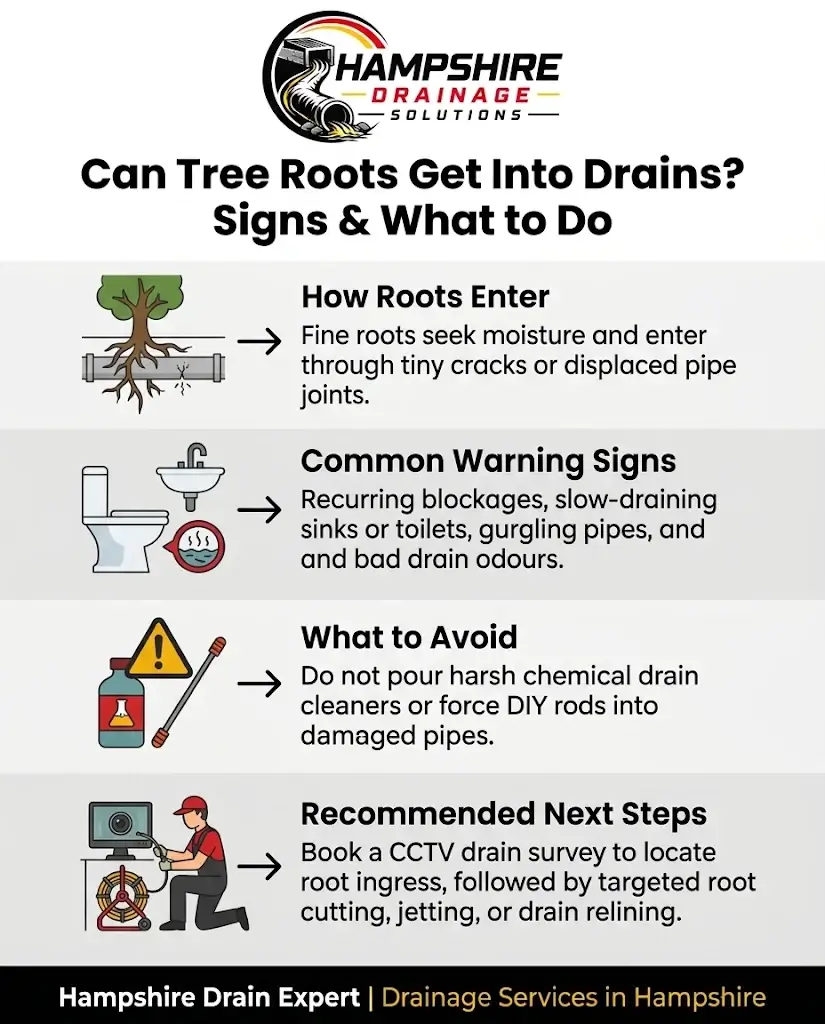
Tree roots naturally grow through soil in search of water, oxygen and nutrients. Underground drainage pipes can provide a source of moisture, particularly where a joint is no longer watertight or a pipe has developed a crack.
Roots do not need a large opening to enter a drain. Fine root tips may penetrate a small gap and gradually expand as they grow.
1. Cracked or Damaged Drain Pipes
Underground pipes can develop cracks because of ground movement, deterioration, loading or previous installation problems.
Moisture escaping through a damaged section may attract nearby roots. Once fine roots reach the opening, they can grow into the pipe and form a dense network.
As the roots increase in size, they may worsen an existing defect or place additional pressure on the surrounding pipework.
2. Loose or Deteriorating Pipe Joints
Older drainage systems may contain joints that have shifted or deteriorated over time.
A small opening between pipe sections can allow moisture to escape into the surrounding soil. Roots growing nearby may enter through the joint and spread along the inside of the drain.
The problem is not limited to older properties. Modern drainage systems can also experience root intrusion when joints or pipes are damaged.
3. Trees and Shrubs Growing Near Drainage Lines
Trees and large shrubs can develop extensive root systems. Their roots may extend well beyond the visible canopy, depending on the species, soil conditions and available moisture.
A tree does not have to stand directly above a drain for its roots to reach underground pipework.
However, the presence of a nearby tree does not automatically mean the drainage system is damaged. A proper inspection is needed to establish whether roots have entered the pipe.
4. Existing Pipe Defects
Root intrusion is often associated with an existing weakness in a drainage system.
Common entry points include:
-
Cracked pipe walls.
-
Open or displaced pipe joints.
-
Broken pipe connections.
-
Damaged inspection chamber connections.
-
Deteriorated sections of underground drainage.
Healthy, properly connected pipes are generally more resistant to root entry than defective pipework.
What Are the Signs of Tree Roots in Drains?
The signs of tree roots in drains can resemble other drainage problems. The most useful clues are repeated blockages, reduced drainage performance and symptoms affecting several fixtures connected to the same pipe.
Common symptoms and what they may indicate
| Warning Sign | Possible Explanation | Recommended Action |
|---|---|---|
| Slow-draining sinks, baths or toilets | Roots or debris may be restricting wastewater flow | Check whether multiple fixtures are affected |
| Repeated drain blockages | Roots may remain inside the pipe after temporary clearance | Arrange a CCTV drain inspection |
| Gurgling sounds | Restricted flow may affect air movement within the drainage system | Investigate the drainage line |
| Unpleasant drain smells | Waste may be collecting around an obstruction | Check visible drains and seek advice |
| Water backing up outside | A downstream pipe may be partially or completely blocked | Avoid further wastewater discharge and seek help |
| Recurring problems after cleaning | An underlying pipe defect may not have been repaired | Assess the pipe condition with CCTV |
Slow Drainage Throughout the Property
A single slow-draining sink may have a local blockage caused by hair, soap or grease.
However, several fixtures draining slowly at the same time may suggest a problem farther along the shared drainage line.
For example, a toilet, bath and outside gully experiencing drainage problems together may indicate an obstruction in the underground pipe serving those fixtures.
Tree roots are one possible cause, but a professional inspection can help distinguish root intrusion from other blockages.
Blockages That Keep Coming Back
Repeated blockages are an important warning sign.
A drain may appear clear after accumulated waste has been removed, but the problem can return when roots remain inside the pipe.
Grease, toilet paper and other debris may become trapped around the root mass, gradually restricting the pipe again.
Repeatedly clearing the symptoms without investigating the underlying cause may lead to further disruption.
Gurgling Sounds From Toilets and Drains
Gurgling noises can occur when wastewater struggles to move through a restricted drainage pipe.
Air movement within the drainage system may be affected, producing bubbling or gurgling sounds in connected fixtures.
These noises do not confirm root intrusion. Ventilation problems, partial blockages and other drainage defects can produce similar symptoms.
Wastewater Backing Up Into Outside Drains
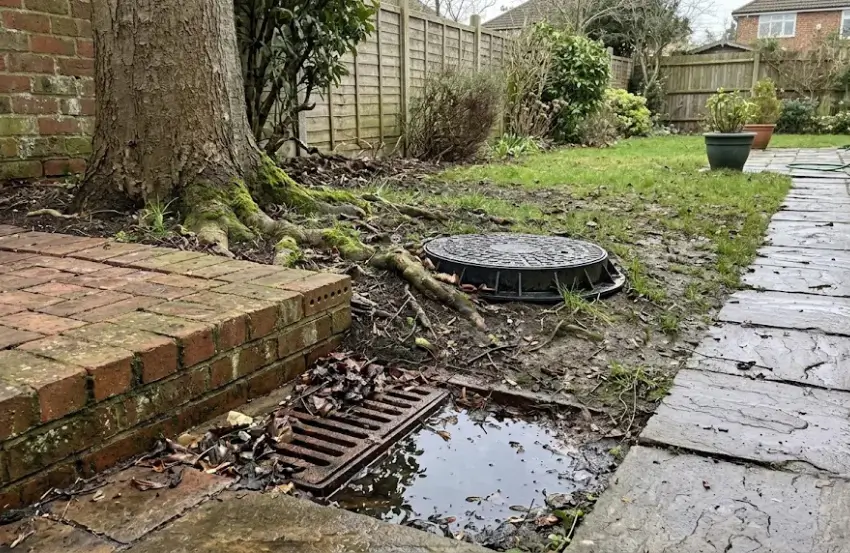
Water collecting in an outside gully or inspection chamber may indicate a blockage farther downstream.
When the pipe becomes heavily restricted, wastewater may no longer flow away at the expected rate.
This situation requires particular care because wastewater can contain harmful microorganisms.
Avoid direct contact with contaminated water and arrange professional assistance where a blockage or sewage backup is suspected.
Can Tree Roots Damage Drain Pipes?
Yes. Tree roots can contribute to further pipe damage after entering through an existing opening.
As roots grow, they may exert pressure on weakened joints and cracked pipe sections. Dense root growth can also trap waste and increase the likelihood of repeated blockages.
The extent of damage depends on the pipe material, its condition, the size of the root intrusion and how long the problem has been developing.
Does Root Intrusion Always Mean the Pipe Needs Replacing?
No. Root intrusion does not automatically require complete pipe replacement.
Some drainage systems may be suitable for root removal followed by a targeted repair. Others may require relining, excavation or replacement of a damaged section.
The appropriate solution depends on the structural condition of the pipe.
A CCTV inspection can help establish whether the pipe remains serviceable or whether a permanent repair is necessary.
How Can a CCTV Drain Survey Detect Tree Roots?
A CCTV drain survey uses a specialist camera to inspect the inside of accessible drainage pipes.
The camera provides visual information about obstructions and defects that cannot be seen from ground level.
For suspected root intrusion, an inspection may help identify:
-
The approximate position of visible root growth.
-
Whether roots have entered through a joint or damaged pipe section.
-
The extent of the visible obstruction.
-
Cracks, displaced joints or other structural defects.
-
Whether additional cleaning or repair work may be necessary.
A camera survey has limitations. Heavy blockages, standing water or restricted access may prevent a complete inspection until the drain has been cleared.
Why Is CCTV Inspection Important Before Repairing Root Damage?
A drainage blockage and a damaged drainage pipe are not necessarily the same problem.
Removing an obstruction may restore wastewater flow without addressing the opening that allowed roots to enter.
A CCTV inspection helps distinguish between a temporary blockage and a structural defect requiring further work.
It can also reduce unnecessary excavation by providing information about the condition of the accessible pipework.
For properties in Winchester, Basingstoke and other confirmed Hampshire service areas, Hampshire Drain Expert can be contacted to discuss suspected root intrusion and the suitability of a camera inspection.
Learn more about CCTV drain surveys in Hampshire and how inspections help identify underground drainage problems.
How to Remove Tree Roots From Drains Safely
The best way to remove tree roots from drains depends on how far the roots have spread and whether the pipe has suffered structural damage.
Professional drainage contractors may use mechanical root-cutting equipment or specialist cleaning methods to remove root growth from suitable pipes.
However, cutting roots is not always a permanent solution. Roots may grow back when the original entry point remains open.
Mechanical Root Cutting
Mechanical root-cutting tools can remove roots obstructing a drainage pipe.
The equipment must be selected according to the pipe diameter, material and condition.
An unsuitable cutting tool can damage weakened pipework, particularly when pipes are already cracked or displaced.
Professional assessment is important before using mechanical equipment inside a damaged drain.
High-Pressure Water Jetting
High-pressure water jetting may help remove loosened root material and accumulated debris after suitable root-cutting work.
However, jetting alone may not remove substantial root growth, and excessive pressure can damage vulnerable pipes.
The drainage contractor should assess the pipe condition before selecting the cleaning method.
Drain Relining
Drain relining may be suitable where root intrusion has occurred through a damaged pipe section that remains structurally appropriate for lining.
The process generally involves cleaning and preparing the pipe before installing a liner that forms a new internal surface.
Relining can help seal certain cracks and defective joints without excavating the entire drainage run.
However, collapsed pipes, severe deformation and some displaced joints may require a different repair method.
Excavation and Pipe Replacement
Some root-damaged drains cannot be repaired effectively from inside the pipe.
Excavation may be necessary where a section has collapsed, become badly displaced or suffered extensive structural damage.
The damaged section can then be exposed and repaired or replaced using an appropriate drainage material.
Read more about drain repairs and relining in Hampshire to understand the available repair options.
Can You Remove Tree Roots From Drains Yourself?
Minor household drainage problems can sometimes be investigated safely without specialist equipment. However, suspected root intrusion inside underground pipes generally requires professional assessment.
Household drain cleaners, plungers and flexible cleaning tools are unlikely to resolve established root growth inside a damaged underground pipe.
Chemical root-killing products also require caution. They may be unsuitable for certain drainage systems, can create environmental risks and do not repair the defect that allowed roots to enter.
Avoid pouring strong chemicals into blocked drains or mixing different cleaning products.
Safe Checks Before Contacting a Drainage Specialist
Property owners can take several practical steps:
-
Check whether one fixture or several fixtures are draining slowly.
-
Make a note of recurring blockages and when they happen.
-
Observe whether an outside gully is backing up, without touching wastewater.
-
Identify nearby trees or shrubs that may be relevant to the drainage route.
-
Record unusual smells or gurgling noises.
-
Reduce wastewater use when a significant blockage is suspected.
-
Arrange an inspection when symptoms continue or return.
Do not enter inspection chambers, attempt to cut roots inside underground pipes or excavate around buried services without appropriate professional arrangements.
How Can You Prevent Tree Roots From Blocking Drains?
Preventing root intrusion involves maintaining the condition of underground pipes and considering drainage routes when planting trees or making changes to a garden.
A healthy tree does not automatically create a drainage problem. The main concern is whether roots can reach a vulnerable pipe section.
Maintain Existing Drainage Pipes
Repeated blockages should not be treated as normal household maintenance.
Where a drainage system regularly becomes obstructed, identifying the cause can help prevent unnecessary repeat cleaning.
A CCTV survey may be useful when there is evidence of recurring structural drainage problems.
Consider Drainage Routes Before Planting
New trees and large shrubs should be positioned with consideration for underground drainage infrastructure.
Root spread depends on the tree species, soil conditions and surrounding environment, so there is no universal safe planting distance for every property.
For new drainage layouts, Water UK’s Design and Construction Guidance provides technical considerations for planting near sewers and lateral drains.
Repair Damaged Joints and Cracks
Removing roots without repairing the entry point can allow the same problem to return.
Where inspection identifies an accessible defect, appropriate pipe repair can reduce the opportunity for further root intrusion.
The repair method should reflect the pipe’s condition rather than simply the presence of roots.
Keep Records of Previous Drainage Problems
Property owners and landlords can benefit from retaining inspection findings, repair records and details of previous blockages.
These records may help a drainage specialist identify recurring problems and determine whether the same pipe section needs further investigation.
Who Is Responsible for Tree Roots Blocking a Drain?
Responsibility generally depends on whether the affected pipe is a private drain, a lateral drain or a public sewer.
In England, property owners are usually responsible for private drains serving their property within its boundary. Water companies generally maintain public sewers and adopted lateral drains, although exceptions can apply.
The position of a tree alone does not determine who is responsible for repairing the drainage pipe.
For example, roots from a neighbouring tree may enter a damaged private drain. The responsibility for the pipe and any potential dispute about the tree are separate questions.
For further information about drainage asset classification and maintenance responsibilities, see Water UK’s guidance on classifying watercourses and sewers. For responsibility at a specific property, contact the relevant sewerage company.
Before arranging work on a potentially shared or public sewer, confirm responsibility with the relevant sewerage company.
Tree Root Problems in Hampshire: What Should Property Owners Know?
Tree root intrusion can affect underground drainage systems in residential gardens, commercial premises and managed properties.
In Hampshire locations such as Winchester and Basingstoke, the same basic warning signs apply: slow drainage, repeated blockages, gurgling noises and wastewater backing up.
The condition and layout of the drainage system matter more than the town itself.
Residential Drainage Problems in Winchester
A homeowner in Winchester might notice that an outside drain repeatedly blocks despite previous cleaning.
Where trees or established shrubs are located near the suspected drainage route, root intrusion may be one possible explanation.
However, grease deposits, damaged pipe joints and other obstructions should also be considered.
A CCTV inspection can help identify the visible cause before repair work is planned.
Repeated Drain Blockages in Basingstoke
A landlord managing a property in Basingstoke may receive reports of slow toilets, gurgling drains or recurring blockages.
Repeatedly clearing the drain without investigating its condition may leave an underlying defect unresolved.
A drainage inspection can help establish whether root growth, damaged joints or another problem is responsible.
These are illustrative situations rather than claims about specific properties or local drainage conditions.
When Should You Contact a Professional Drainage Company?
Professional help is appropriate when drainage problems persist, return after cleaning or affect multiple fixtures.
Contact a drainage specialist when:
-
A blockage repeatedly returns.
-
Several drains become slow at the same time.
-
Wastewater backs up into the property or garden.
-
An underground pipe is suspected of being damaged.
-
Tree roots have been identified during a previous inspection.
-
A repair decision requires information about the pipe’s structural condition.
Where sewage is overflowing, minimise wastewater use, keep people and pets away from contaminated areas and arrange prompt assistance.
For suspected root intrusion, Hampshire Drain Expert can discuss the drainage symptoms and whether a CCTV survey is an appropriate next step.
Frequently Asked Questions About Tree Roots in Drains
1. Can tree roots grow into underground drain pipes?
Yes. Fine tree roots can enter underground drainage pipes through cracks, damaged joints or other openings. Once inside, they may grow and trap debris, gradually restricting wastewater flow.
2. What are the first signs of tree roots blocking drains?
Common warning signs include slow drainage, recurring blockages, gurgling sounds and wastewater backing up. These symptoms are not exclusive to root intrusion, so a CCTV inspection may be needed to confirm the cause.
3. How do professionals remove tree roots from drains?
Professionals may use suitable mechanical root-cutting equipment and cleaning methods. The pipe may also require relining or replacement when roots have entered through a structural defect.
4. Will tree roots grow back after drain cleaning?
Yes, roots may return when the original entry point remains open. Removing the obstruction can restore flow, but repairing the damaged joint or pipe section may be necessary to reduce recurrence.
5. Can tree roots in drains be fixed without digging?
Sometimes. Suitable pipes may be cleared and repaired internally using methods such as root cutting and drain relining. Severely damaged or collapsed pipes may require excavation and replacement.
Conclusion: What Should You Do About Tree Roots in Drains?
Tree roots can enter damaged underground drainage pipes and gradually cause blockages, poor wastewater flow and further pipe deterioration.
The most important step is identifying the actual cause rather than repeatedly treating the symptoms.
A CCTV drain survey can help locate visible root intrusion, assess the condition of accessible pipework and determine whether cleaning, repair or replacement may be appropriate.
Early investigation is particularly useful when blockages keep returning or several drainage fixtures are affected.
Need Help With Suspected Tree Roots in Your Drains?
Hampshire Drain Expert provides drainage services across Hampshire, including CCTV drain surveys and drain repairs.
Speak to the team about recurring blockages, suspected underground pipe damage or drainage problems that may involve tree roots.
Call: 07307 508571
Email: info@hampshiredrainage.co.uk
Website: Hampshire Drain Expert
Arrange a CCTV Drain Survey to investigate suspected root intrusion and understand the next steps for your drainage system.