A blocked toilet is never a minor problem when the bowl is filling instead of emptying. If the water is rising, draining very slowly, or backing up after a flush, act quickly and stop using it straight away. For urgent help anywhere in Hampshire, call our Hampshire engineers now for 24/7 emergency blocked toilet clearance.
Most toilet blockages start with everyday habits, not major pipe failure. The good news is that many causes are easy to spot, and the point where you should stop DIY is usually clear as well.
Blocked toilet warning signs you should not ignore
A blocked toilet does not always start with water spilling over the rim. Quite often, it begins with a toilet that is hard to flush, a bowl that fills higher than normal, or waste water that drops away very slowly.
You may also notice a bad smell from the toilet or nearby drains. If your sink, bath, or shower is slow at the same time, that can point to a blockage further along the drain line rather than only in the toilet pan.
Common warning signs include:
- Water rising towards the brim
- Slow draining after each flush
- Gurgling sounds from the toilet
- Bad drain smells in the bathroom
- Water backing up elsewhere
- Overflow outside at a gully or manhole
If the level in the bowl keeps climbing, do not flush again to “see if it clears”. That often turns a blocked toilet into a dirty clean-up job.
What causes a blocked toilet in UK homes
In most Hampshire properties, the cause is simple: something has been flushed that should have gone in the bin. Toilets and drains are built to carry the three Ps only, pee, poo, and paper.
Wet wipes are one of the biggest culprits. UK guidance from government and water-sector sources keeps warning about them, even when the packet says “flushable”. Those wipes do not break down well in real sewer conditions, and they catch on rough pipework, bends, and existing build-up.
Sanitary items, cotton pads, nappies, kitchen roll, paper towels, and too much toilet paper can do the same. In homes with young children, small toys or toilet freshener blocks can also slip into the pan and lodge in the trap.
A blocked toilet can also be caused by a problem further down the line. If the branch pipe or main drain is partly blocked by wipes, scale, fat, roots, or a damaged pipe, the toilet is often the first place you notice it because it has the largest waste outlet inside the house.
| Cause | Why it blocks | What you should do |
|---|---|---|
| Wet wipes | They stay intact and snag in the pipe | Stop flushing them and arrange clearance |
| Sanitary products | They swell and do not break down | Remove from use and bin them |
| Too much toilet paper | Large wads can lodge in the pan trap | Wait, then try one careful plunge |
| Child’s toy or solid object | It gets stuck in the toilet bend | Avoid more flushing and call a pro |
| Build-up in the drain line | Waste cannot move away properly | Book blocked toilet clearance |
| Cracked or root-damaged drain | Debris catches and blockage keeps returning | Arrange a CCTV survey |
DEFRA has stated that wet wipes contribute to a very large share of sewer blockages in the UK, which is why they come up again and again in blocked toilet call-outs.
What you can safely try before calling for blocked toilet clearance
There are a few safe first steps if the toilet is not overflowing and the water level is dropping on its own. Keep it simple, keep it clean, and do not force anything.
Start by putting on gloves and laying old towels around the base of the toilet. If the bowl is close to the top, take out some water with a small container so it does not spill when you work.
Then use a proper toilet plunger. Push down gently at first to seal it over the outlet, then use firm, steady strokes. A few controlled plunges are better than frantic pumping.
Safe steps are:
- Stop flushing: one extra flush can cause an overflow
- Use a toilet plunger: keep the seal tight and work steadily
- Wait between attempts: some paper blockages soften with time
- Clean up carefully: blocked toilet water can carry bacteria
- Bin wipes and sanitary items: never try to flush them through
Do not pour strong chemicals into a blocked toilet. They rarely solve a solid blockage, and they can splash back or sit in the pan, which makes the job more hazardous for anyone clearing it later.
Be careful with rods from inside the bathroom as well. Used wrongly, they can scratch or crack the toilet pan, dislodge joints, or push the blockage further along.
If you need urgent help at this stage, get 24/7 emergency dispatch here and have a local engineer sent out fast.
When a blocked toilet points to a wider drain problem
If only one toilet is affected and the blockage happened straight after too much paper or a foreign object went down, the problem may be local to that toilet. If other fittings are also slow, the issue is often deeper in the drainage system.
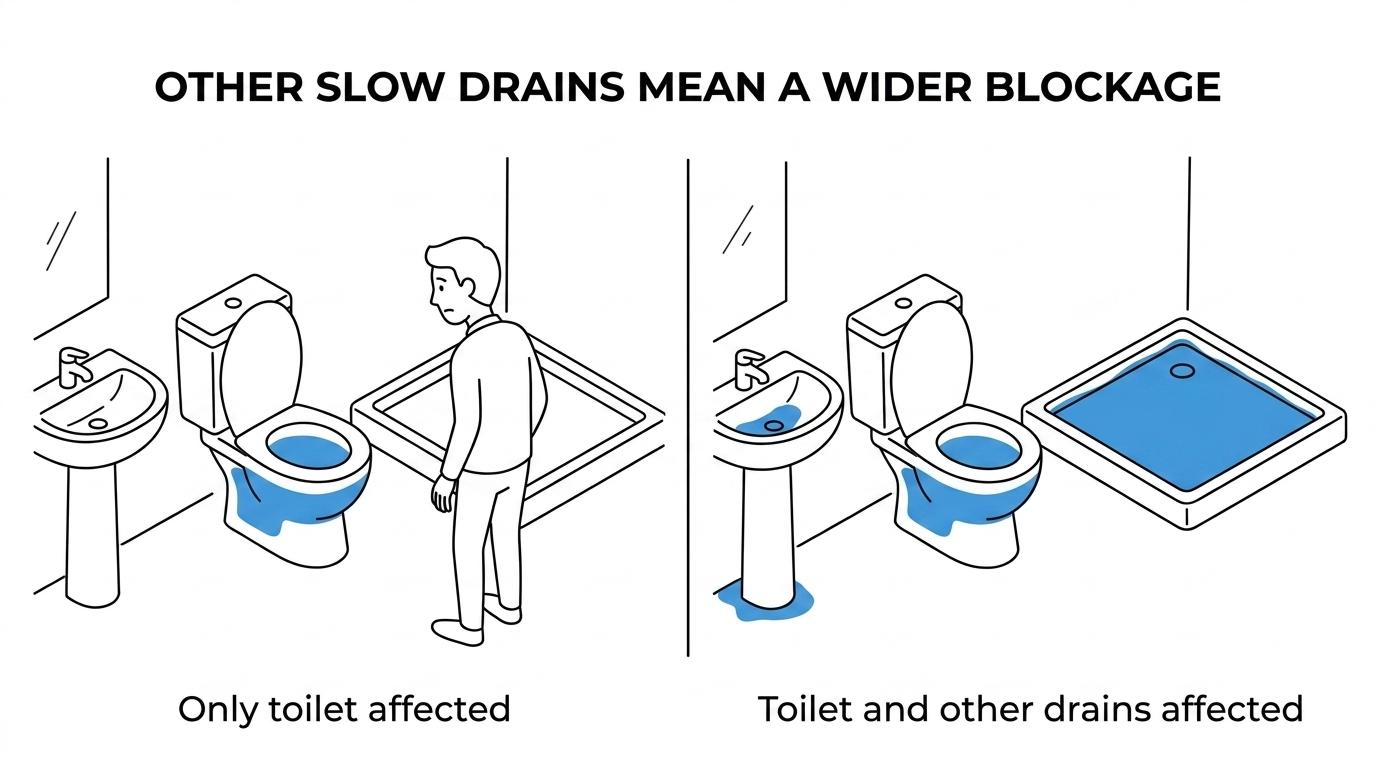
Watch for water coming up in the shower tray when the toilet is flushed. Listen for gurgling in nearby sinks. Check outside for a full gully or an overflowing manhole.
Those signs suggest the wastewater is not moving away from the property as it should. In that case, you are no longer dealing with just a blocked toilet pan. You may need emergency drain unblocking on the branch line or main run.
Repeat blockages matter too. If the toilet keeps blocking every few weeks, there may be a hidden defect in the pipe. A CCTV survey is often the quickest way to find out if there is a crack, root ingress, a poor joint, or heavy scale build-up.
A CCTV survey is simply a drain camera inspection. It shows exactly where the problem is, so the fix can be targeted instead of guessed.
When to call a professional for a blocked toilet
Professional bodies in the UK generally advise calling an engineer straight away in most blocked toilet cases, especially when the water is rising or draining very slowly. That is good advice. A blocked toilet is unpleasant, but it is also a hygiene risk.
You should also call if vulnerable people, tenants, customers, or staff need that toilet in regular use. In flats, HMOs, cafés, offices, and shops, waiting too long can turn a small blockage into lost use of the washroom and damage to floors.
A drainage engineer has the right kit to clear the blockage safely and check whether it stops at the toilet or continues into the drain. That may mean careful toilet access tools, external rodding from the correct point, water jetting outside the property, or a camera check if the cause is not obvious.
Call a pro straight away if:
- Water is rising: the bowl is close to overflowing
- Wastewater is backing up: dirty water returns after flushing
- More than one fixture is slow: the blockage may be in the drain line
- There is an outside overflow: a gully or manhole is surcharging
- You suspect an object: toys, blocks, wipes, or sanitary items are involved
- The blockage keeps coming back: a deeper fault is likely
In these cases, DIY can make the job bigger. Quick attendance is usually the cheapest route because it reduces the chance of overflow damage and repeat visits.
Who is responsible for a blocked toilet or drain in Hampshire
If the blockage is inside your toilet, soil pipe, or private drain serving only your property, it is usually your responsibility. That is the common setup for houses and many ground-floor properties.
If the issue is in a public drain, the reporting route is different. GOV.UK points people to the council to report a blocked public drain in England and Wales. That normally applies to drainage the public authority is responsible for, not the toilet inside your home.
Shared drainage can be less obvious. If your toilet is blocked and neighbours are affected too, or a shared manhole is overflowing, the problem may be beyond your private pipework. A local drainage engineer can help locate the blockage and tell you whether it looks private, shared, or public.
For landlords and managing agents, a fast site visit is often the most practical first step. It gets the toilet back in use, helps limit property damage, and gives you a clear record of what was found.
How blocked toilet engineers clear the fault properly
The first job is to stop the backup and restore flow without damaging the toilet or pipework. That means checking the bowl, trap, and nearby waste route rather than attacking it blindly.
If the blockage is inside the toilet, it may be cleared there and then. If it is further along, access may be taken from an outside inspection chamber or manhole so the line can be cleared the right way.
Common methods include:
- Toilet blockage clearance by hand tools made for the pan
- External drain rodding from the proper access point
- High-pressure water jetting for built-up waste in the drain
- CCTV survey for repeat blocked toilet problems
- Patch lining if a damaged section keeps snagging waste
Patch lining is a no-dig repair for a local damaged area inside the pipe. If a camera shows a crack or joint defect causing repeated snags, it can often be fixed without digging up the whole run.
Fast blocked toilet help across Hampshire
Whether you are in Southampton, Portsmouth, Winchester, Basingstoke, Eastleigh, Fareham, Andover, or nearby, quick local response matters when a toilet is backing up.
Hampshire Drain Expert handles blocked toilet emergencies 24/7 with transparent fixed pricing, zero hidden call-out fees, and fast dispatch from local engineers. You get a practical fix, clear advice, and the right next step if the blockage turns out to be further down the line.
If your blocked toilet is rising, slow to drain, or backing up into the home, tap here to speak to a local blocked toilet engineer and arrange emergency help now.