
A damaged underground drain can leave property owners uncertain about what their insurance provider needs before considering a claim. The most useful drain damage insurance evidence usually includes dated photographs, a detailed drainage inspection report, CCTV survey findings, records of when the problem appeared, and itemised repair quotations.
These documents help establish where the damage is located, what condition the pipe is in, how the problem affects drainage and what work may be necessary. They can also help an insurer assess whether the damage falls within the terms of the policy.
For homeowners, landlords and property managers in Hampshire, collecting evidence early can make the assessment process more straightforward. Hampshire Drain Expert provides drainage inspection and repair services, including CCTV drain surveys that can help identify underground defects and document their condition.
However, a drainage report does not automatically establish insurance cover. Insurers consider the policy wording, the cause of damage, ownership of the affected pipework and any relevant exclusions.
Before arranging permanent repairs, contact your insurer, explain the drainage problem and ask what inspection evidence or authorisation they require. Urgent safety measures may still be necessary where sewage is escaping or property damage is continuing.
What Evidence Is Needed for a Drain Insurance Claim?
The evidence needed for a drain insurance claim depends on the type of damage, the insurance policy and the circumstances surrounding the problem.
An insurer may need to establish whether a drain is cracked, displaced, collapsed, obstructed or otherwise unable to function correctly. They may also investigate whether the problem developed gradually or resulted from an event covered by the policy.
A useful evidence package should explain both the visible symptoms and the condition of the underground pipework.
| Evidence type | What it demonstrates | Why it may help |
|---|---|---|
| Dated photographs | Visible flooding, sewage escape or surface damage | Records the initial condition of the affected area |
| CCTV drain survey | Internal pipe condition and identifiable defects | Provides evidence of problems that cannot be seen from the surface |
| Drainage inspection report | Defect locations, pipe materials and observations | Helps explain the nature and extent of damage |
| Drainage layout diagram | Approximate route and connections of affected pipes | Helps identify which pipe section is involved |
| Written incident timeline | When symptoms started and how they developed | Helps establish the sequence of events |
| Repair quotation | Proposed work and estimated costs | Supports assessment of the required remedial work |
| Maintenance records | Previous inspections, cleaning and repairs | Provides background about the drainage system |
| Invoices and receipts | Work completed and associated expenditure | Documents costs incurred |
| Insurance correspondence | Claim instructions and authorisations | Creates a record of communication with the insurer |
The Financial Ombudsman Service’s guidance on damage to underground pipes explains the importance of drainage reports, pipe condition information and other supporting evidence when disputes arise.
A complete record is generally more informative than photographs or a short contractor statement alone.
How Should You Document Drain Damage for Insurance?
Documenting drainage damage involves recording the problem before it changes, keeping accurate dates and preserving evidence of any inspection or emergency work.
1. Photograph the Visible Damage
Begin with photographs of the affected area, provided it is safe to approach.
Useful subjects include:
- Wastewater overflowing from an outside drain.
- Water backing up through sinks, toilets or floor drains.
- Dampness or staining associated with suspected drainage problems.
- Damaged paving or ground movement near the drainage route.
- Visible cracks or displaced drain components.
- Sewage contamination affecting accessible areas.
- Damaged property or belongings associated with the incident.
Take both wide photographs showing the surroundings and closer images showing specific defects.
Keep the original files where possible, including their dates and metadata. Avoid editing images in ways that could obscure important details.
A photograph of standing water may demonstrate the consequences of a drainage problem, but it does not necessarily establish the condition of an underground pipe.
That distinction is important when an insurer needs evidence of the underlying cause.
2. Record When the Problem Started
Write a simple timeline describing the drainage issue.
Include:
- The date and approximate time symptoms were first noticed.
- Which fixtures or drainage outlets were affected.
- Whether the problem appeared suddenly or developed over time.
- Any relevant weather conditions.
- Previous blockages or drainage investigations.
- Steps taken to prevent additional damage.
- Dates of contact with drainage contractors and insurers.
Be factual about anything uncertain.
For example, discovering sewage backing up on a particular morning does not prove that a pipe fractured that day.
A clear timeline helps the insurer understand what happened without making unsupported assumptions about the cause.
3. Keep Previous Drainage Records
Earlier inspection reports, repair invoices and maintenance records can provide valuable background.
They may help establish whether a defect was previously identified, whether maintenance was undertaken or whether the drainage system had recurring problems.
Landlords and commercial property managers should also retain relevant contractor correspondence and property maintenance records.
These documents can be particularly helpful where the insurer is considering whether damage was gradual or unexpected.
4. Contact the Insurer Before Permanent Repairs
Notify your insurer promptly and ask about its claims procedure.
Some policies require the insurer to inspect the drainage system or approve repairs before work begins.
Ask whether the insurer will appoint a drainage contractor, accept an independent survey or require a particular report format.
Where immediate action is necessary to prevent further damage, explain the circumstances and preserve photographs, invoices and contractor notes.
Avoid delaying essential safety measures merely to keep the damaged area unchanged.
How Can a CCTV Drain Survey Support an Insurance Claim?
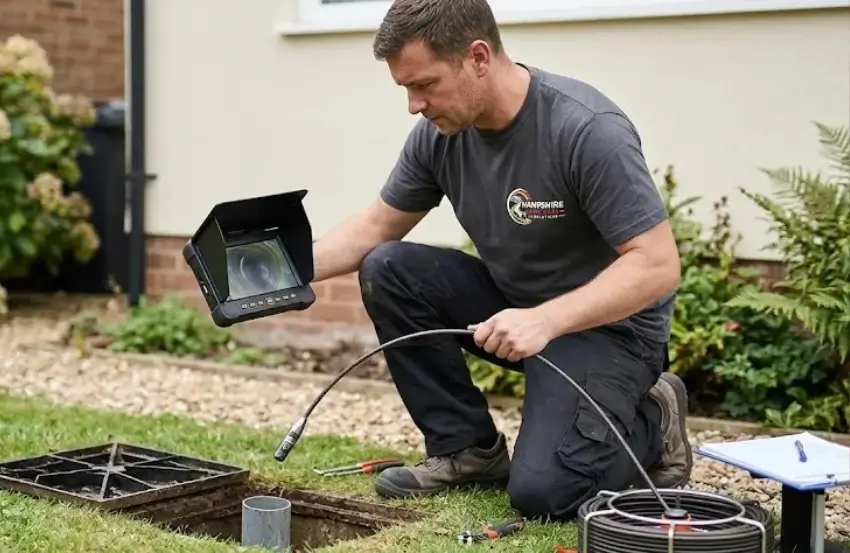
A CCTV drain survey for insurance claims can provide visual evidence of the internal condition of underground drainage pipes.
A drainage camera is introduced through a suitable access point and used to inspect accessible sections of the pipework.
Depending on the conditions and available access, an inspection may identify:
- Cracked or fractured pipe walls.
- Displaced or open pipe joints.
- Root intrusion.
- Deformed pipe sections.
- Partial or complete collapses.
- Deposits and obstructions.
- Evidence of restricted water flow.
- Defects requiring further investigation.
The recorded findings can help distinguish between an ordinary blockage and a problem involving physical damage.
However, CCTV images do not always establish exactly when damage occurred or what caused it.
What Should a CCTV Drain Survey Report Include?
A detailed inspection report is generally more useful than a brief statement saying that the drain is damaged.
Relevant information may include:
| Report detail | Purpose |
|---|---|
| Inspection date | Establishes when the pipe was examined |
| Property and inspection location | Identifies the affected drainage system |
| Pipe material | Records the construction of the inspected section |
| Drainage layout | Shows the inspected pipe route and connections |
| Defect description | Explains the observed problem |
| Defect position | Identifies where the issue occurs along the pipe |
| Photographs or video references | Supports the written findings |
| Inspection limitations | Identifies sections that could not be assessed |
| Recommended next steps | Explains whether further investigation or repair is appropriate |
The Financial Ombudsman Service specifically highlights the value of reports containing pipe layouts, defect locations and pipe materials when assessing underground pipe complaints.
For property owners in Hampshire, a suitable starting point is Hampshire Drain Expert’s CCTV Drain Surveys service.
Before booking, confirm whether the proposed inspection and report format meet your insurer’s requirements.
Can CCTV Footage Prove That Drain Damage Is Accidental?
CCTV footage can demonstrate the existence and condition of a defect, but proving accidental damage may require additional evidence.
For example, a camera may reveal a fractured pipe or displaced joint. The recording alone may not establish whether the defect resulted from accidental impact, gradual deterioration, ground movement or another cause.
An insurer may consider the pipe’s material, previous maintenance records, surrounding conditions and professional observations.
The distinction between an observed defect and its suspected cause should remain clear throughout the report.
Does Home Insurance Cover Damaged Underground Drains?
Many UK buildings insurance policies include some cover for underground services, but the precise protection varies.
The policy may cover accidental damage or breakage to underground drains for which the policyholder is legally responsible.
However, cover can be affected by exclusions, the type of pipe, the cause of damage and the section of drainage involved.
Common Insurance Considerations
Accidental damage: Some policies provide cover where damage meets the policy’s definition of an accidental event.
Wear and tear: Gradual deterioration is commonly excluded, although the insurer must assess the circumstances and relevant policy wording.
Pipe ownership: A policy may only cover drains for which the property owner is legally responsible.
Pitch fibre drainage: Some policies exclude damage to pitch fibre pipes or apply specific conditions.
Blockages: A blocked drain may represent a loss of function, but whether it is insured depends on the policy and evidence.
Consequential damage: Damage to floors, walls or other property may fall under different policy provisions from the underground pipe itself.
The Financial Ombudsman Service’s accidental damage guidance explains how evidence, policy definitions and exclusions are considered.
A contractor can assess drainage conditions, but the insurance provider is responsible for determining cover under the policy.
What Types of Drain Damage Require Stronger Supporting Evidence?
Some drainage problems are straightforward to identify, while others require more detailed investigation.
Cracked or Fractured Drain Pipes
A cracked underground pipe may continue carrying wastewater despite having a visible defect.
An inspection should describe the crack, its location and any associated problems.
The presence of a crack does not automatically establish that the damage is insured.
Collapsed Drainage Pipes
A collapsed drain can restrict or prevent wastewater movement.
Supporting evidence may include CCTV findings, photographs of exposed pipework where excavation has been necessary, and a report describing the extent of the collapse.
Where the camera cannot pass through a damaged section, the report should explain that limitation.
Root Intrusion and Displaced Joints
Tree roots may enter through defective joints or openings in drainage pipes.
CCTV footage can help identify the location and severity of the intrusion.
However, the insurer may need further information to determine whether the underlying condition is covered.
Repeated Blockages
Recurring blockages do not necessarily mean that a pipe has collapsed.
Deposits, unsuitable items entering the drainage system, poor flow conditions and structural defects can all contribute.
A professional inspection may help determine whether cleaning alone is appropriate or whether repair should be considered.
Hampshire Drain Expert’s Blocked Drains, Sinks and Toilets service is relevant where recurring drainage symptoms require investigation.
What Should You Do Before Arranging Drain Repairs?
Permanent repairs should normally be discussed with the insurer before work begins, unless urgent circumstances make immediate action necessary.
A practical approach involves the following steps.
Step 1: Make the Area Safe
Avoid contact with sewage and contaminated floodwater.
Keep children and pets away from affected areas. Do not enter manholes, confined drainage chambers or unstable excavations.
Where electrical equipment or wiring may have been affected by flooding, avoid approaching or operating it until the situation has been assessed safely.
Step 2: Prevent Further Damage Where Safe
Reduce use of affected sinks, toilets and appliances where continued discharge may worsen an overflow.
Do not pour chemical drain cleaners into a system that is backing up.
Avoid attempting to lift heavy drain covers or force equipment into underground pipework.
Step 3: Notify the Insurance Provider
Explain what has happened and provide the initial photographs and timeline.
Ask whether an inspection is required before repairs are authorised.
Record the claim reference number and any instructions provided.
Step 4: Arrange Appropriate Drainage Investigation
Where an inspection is needed, establish what the insurer expects the contractor to document.
The inspection may need to establish the affected pipe’s condition, location, material and possible repair requirements.
Step 5: Obtain a Written Repair Proposal
A suitable quotation should describe the proposed work and distinguish between investigation, clearance, repair and reinstatement where applicable.
Different defects may require different solutions.
For information about available options, see Hampshire Drain Expert’s Drain Repairs and Relining service.
Step 6: Preserve Records After the Work
Keep final invoices, photographs, inspection reports and relevant communications.
Where further inspection is undertaken after repairs, retain that documentation as well.
These records may be useful for the current claim and future property maintenance.
Who Is Responsible for a Damaged Drain in Hampshire?
Drain ownership matters because an insurance policy may not cover pipework belonging to a water company or another property owner.
In England, responsibility generally depends on whether the affected pipe is a private drain, lateral drain or public sewer, alongside the applicable ownership arrangements.
A private drain serving one property within its boundary is commonly the property owner’s responsibility.
Many shared sewers and lateral drains are maintained by the relevant sewerage undertaker, although exceptions and special arrangements exist.
A pipe passing through private land is not automatically privately owned.
For a property in Southampton, Portsmouth, Winchester or elsewhere in Hampshire, the relevant sewerage undertaker and the drainage layout should be established before assuming responsibility.
The Water UK website provides information about the UK water industry and its member companies.
Property owners can also use the Ofwat website for regulatory information about water and wastewater services in England and Wales.
A CCTV inspection may help establish the drainage layout, but legal responsibility may require confirmation from the relevant water company or property documentation.
What Happens When a Drain Insurance Claim Is Rejected?
A rejected claim does not always mean the drainage evidence was incorrect.
The insurer may accept that a defect exists but decide that the cause, ownership or policy wording prevents cover.
Common reasons for disputes include:
- Insufficient evidence of the pipe’s condition.
- Disagreement about whether damage was accidental.
- An exclusion for gradual deterioration.
- Uncertainty about pipe ownership.
- Repairs completed before inspection.
- Disagreement over the extent of necessary repairs.
- A report that lacks detail about the defect.
How Can You Respond to a Rejected Claim?
Start by requesting the insurer’s written explanation.
Compare the decision with the policy wording and the evidence submitted.
Where the issue concerns technical findings, consider whether the existing drainage report addresses the insurer’s concerns.
A supplementary explanation or additional inspection may be useful where important information is missing.
Keep all communication factual and retain copies of correspondence.
Where a disagreement remains unresolved, follow the insurer’s formal complaints procedure.
The Financial Ombudsman Service provides independent information about eligible complaints involving insurance providers.
An independent drainage assessment can help clarify technical findings, but it cannot guarantee that an insurer will reverse its decision.
How Can Hampshire Property Owners Prepare Better Drainage Records?
Good drainage documentation should begin before a major problem occurs.
For homeowners, this may involve keeping previous survey reports, invoices and notes about recurring drainage symptoms.
Landlords can maintain records of tenant reports, inspections, contractor visits and completed repairs.
Commercial property managers may benefit from organised drainage maintenance records, especially where several buildings or shared systems are involved.
Useful practices include:
- Store drainage reports in a dedicated property folder.
- Keep photographs with identifiable dates.
- Record recurring blockages and the affected outlets.
- Retain invoices for drainage cleaning and repairs.
- Keep available drainage layout drawings.
- Record who authorised work on shared systems.
- Review relevant insurance policy conditions.
- Investigate persistent drainage problems rather than repeatedly treating symptoms alone.
These practices do not establish insurance eligibility, but they can make future investigations more efficient.
For properties across Hampshire, including Southampton, Portsmouth, Winchester and Basingstoke, keeping clear records can also support maintenance planning and communication between owners, tenants and contractors.
How Can You Reduce the Risk of Future Drain Damage?
Not every underground drainage defect can be prevented, particularly where older pipes are affected by movement or deterioration.
However, sensible maintenance can help reduce avoidable blockages and identify developing problems.
Avoid Putting Unsuitable Materials Down Drains
Cooking fats, oils, wipes and other unsuitable materials can contribute to drainage obstructions.
Dispose of these materials appropriately rather than flushing or washing them into the drainage system.
Investigate Repeated Warning Signs
Recurring toilet blockages, slow drainage and wastewater backing up should not be ignored.
A single blockage may be resolved through clearance, but repeated symptoms can justify further investigation.
Keep Accessible Drainage Areas Clear
Avoid allowing debris to accumulate around accessible gullies and surface drainage outlets.
Do not enter drainage chambers or undertake unsafe work.
Arrange Inspections When There Is a Clear Reason
CCTV surveys can be useful where there are recurring symptoms, suspected structural defects or a specific need to establish pipe condition.
They are not automatically necessary for every minor blockage.
The appropriate investigation should reflect the problem and the information required.
Frequently Asked Questions About Drain Damage Insurance Evidence
1. What Is the Most Important Evidence for a Drain Insurance Claim?
A detailed drainage inspection report is often particularly important because it can identify underground defects and explain the condition of the pipe. Photographs, an incident timeline, repair quotations and policy documents provide supporting information.
2. Can a CCTV Drain Survey Help an Insurance Claim?
Yes. A CCTV drain survey can document cracks, displaced joints, collapses and other defects. The insurer will assess those findings alongside the policy wording and other evidence. A survey does not guarantee claim acceptance.
3. Should I Repair a Damaged Drain Before Contacting My Insurer?
Contact the insurer before permanent repairs wherever practical. Some policies require prior inspection or authorisation. Urgent measures may be necessary to prevent further damage, so record the circumstances and retain photographs and invoices.
4. Does Buildings Insurance Cover a Collapsed Drain?
Some buildings insurance policies cover accidental damage to underground drains for which the policyholder is responsible. Cover depends on the policy terms, cause of collapse and applicable exclusions.
5. Can an Insurance Claim Be Reconsidered After Rejection?
Yes. A policyholder can ask the insurer to review a decision and provide additional evidence where appropriate. Unresolved eligible complaints may be referred to the Financial Ombudsman Service after following the relevant complaints process.
Conclusion: What Evidence Should You Collect Before Making a Drain Insurance Claim?
A well-documented drainage problem is easier to assess than one supported only by a description of the symptoms.
The most useful drain damage insurance evidence combines photographs, a clear incident timeline, a detailed drainage report, relevant CCTV findings and records of proposed or completed repairs.
The aim is to establish what has happened, where the problem is located and what the available evidence shows about the condition of the drainage system.
Insurance cover remains a separate question determined by the policy and the insurer’s assessment.
Speak to Hampshire Drain Expert About a Drainage Inspection
Concerned about a damaged underground drain at your Hampshire property?
Hampshire Drain Expert can help investigate drainage problems and discuss suitable inspection or repair services.
Contact us to explain the symptoms and establish what drainage investigation may be appropriate. Where an insurance claim is involved, confirm the evidence and reporting requirements with your insurer before booking.
Call: 07534247438
Website: Hampshire Drain Expert
Request a Drainage Assessment or Arrange a CCTV Drain Survey.